Read with Claude
 Read with ChatGPT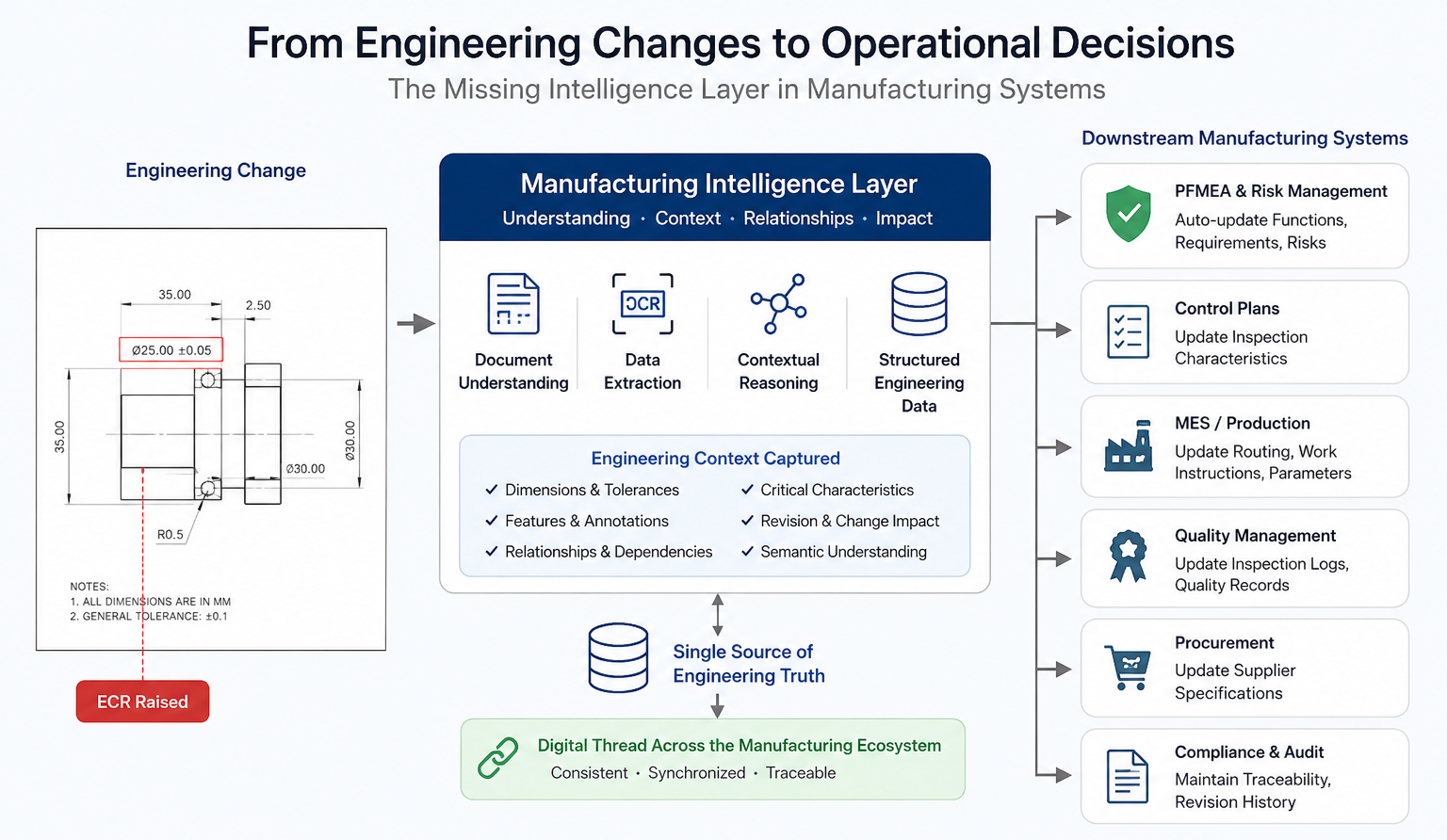
Every manufacturing organization has invested heavily in systems. PLM manages product definitions. ERP manages materials and procurement. MES controls production execution. QMS governs quality processes.
Yet despite this technology stack, a large amount of critical manufacturing knowledge still moves through spreadsheets, emails, PDFs, and manual data entry.
Consider a common scenario: An Engineering Change Request (ECR) modifies a critical tolerance on a component drawing. The engineering team updates the drawing revision and releases the change.
From there, the impact ripples across the organization.
Quality engineers must update inspection criteria and control plans. Manufacturing engineers review process instructions and PFMEAs. Procurement teams assess supplier implications. Production teams verify that existing processes can still meet the revised specification.
Engineering Changes → Operational Decisions
The challenge is not that the information is unavailable.
The challenge is that every downstream team must interpret the change, determine what it affects, and manually update their systems.
The drawing contains the engineering intent. The operational systems contain the execution plans. What is missing is the intelligence layer that connects the two.
The Role of Context Engineering in Manufacturing AI
The Challenge
Most manufacturing systems are designed to store information, not understand it.
A drawing revision may contain everything needed to understand a design change, but downstream systems typically consume only fragments of that information.
As a result, engineers spend significant time:
- Copying dimensions and specifications into engineering and quality systems.
- Updating PFMEAs, control plans, and inspection documents manually.
- Verifying whether downstream documentation reflects the latest revision.
- Searching historical records for similar failures and corrective actions.
- Coordinating changes across departments through emails and meetings.
The problem becomes even more pronounced in organizations managing hundreds or thousands of active part numbers across multiple product lines.
A single revision change can trigger updates across dozens of interconnected documents and workflows.
When these updates depend on manual interpretation and communication, gaps inevitably appear.
The consequences are familiar:
- Delayed engineering change implementation.
- Inconsistent PFMEA and control plan updates.
- Repeated data entry across multiple systems.
- Lost institutional knowledge.
- Audit findings related to documentation traceability.
- Production delays caused by outdated specifications.
The issue is not a lack of systems. The issue is the absence of a mechanism that understands how engineering information relates to operational processes.
What a Engineering Intelligence System Should Enable
Many organizations approach this challenge through document digitization. The assumption is simple: if engineering drawings can be converted into digital data, the problem is solved.
In reality, extraction alone is only the first step. A manufacturing system must understand more than values. It must understand relationships.
A tolerance is not simply a number. It is connected to a feature, a manufacturing process, an inspection method, a potential failure mode, and a set of quality requirements.
Without that context, extracted data remains isolated information. The real opportunity lies in transforming engineering documents into structured engineering knowledge.
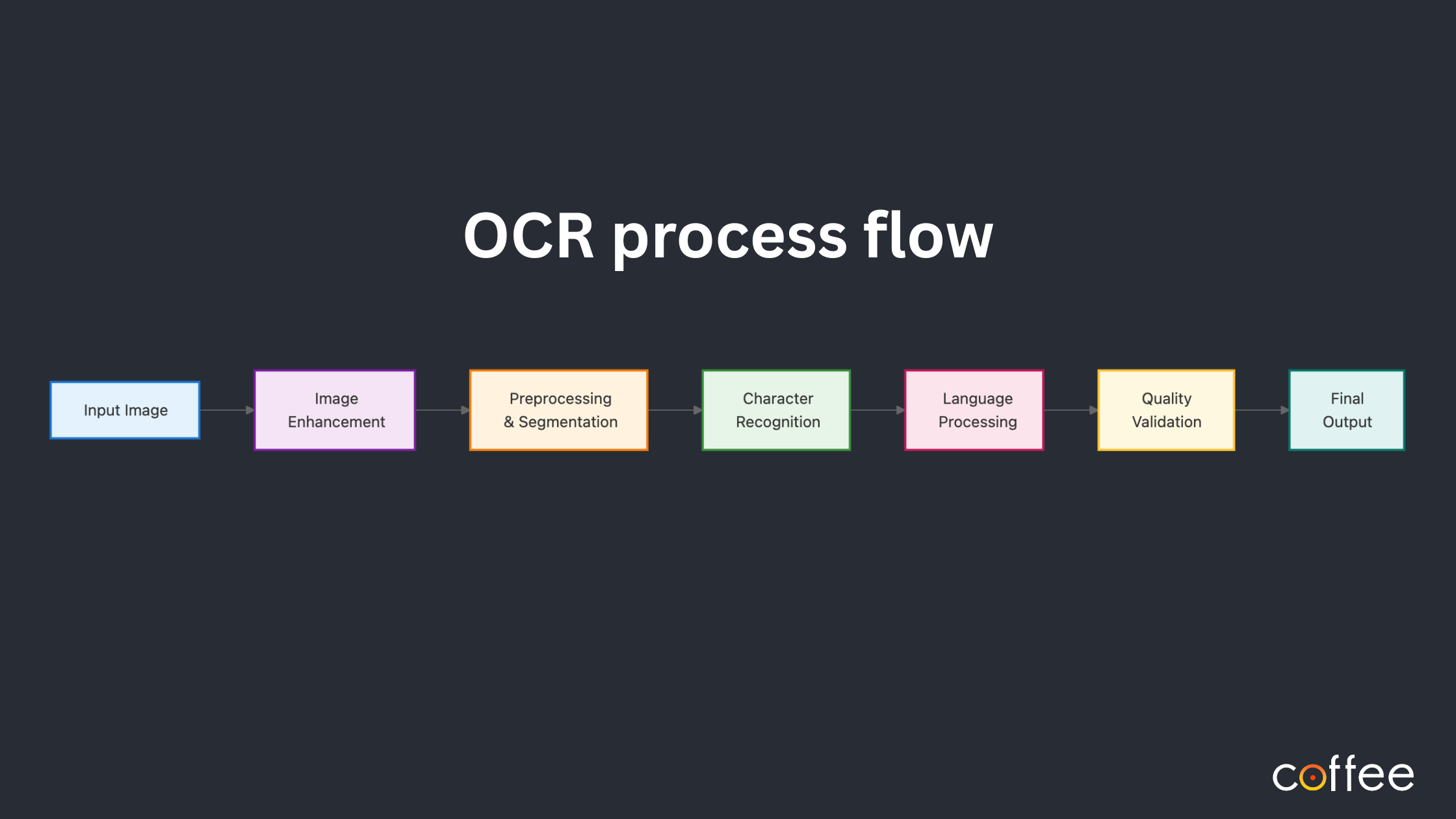
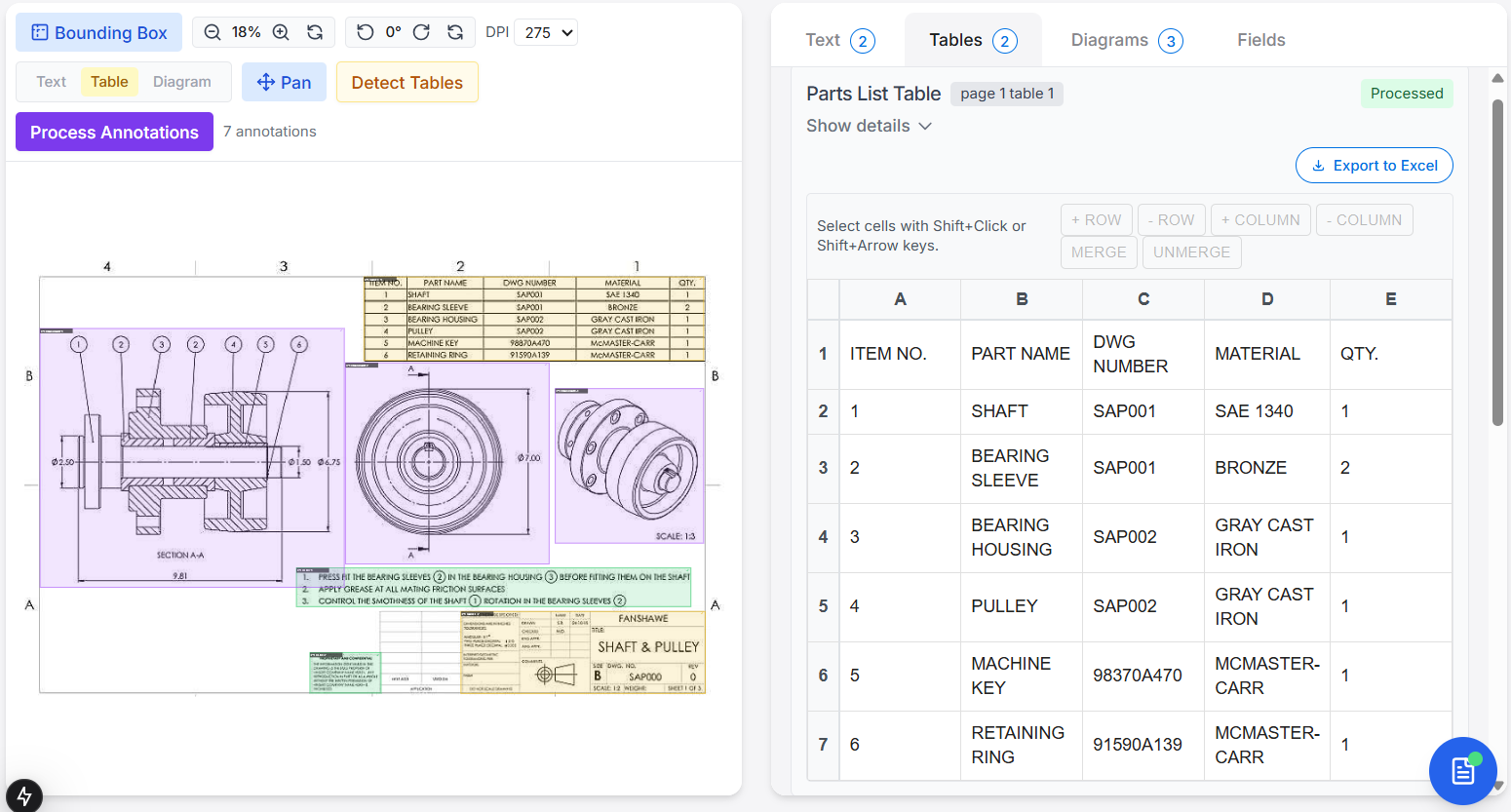
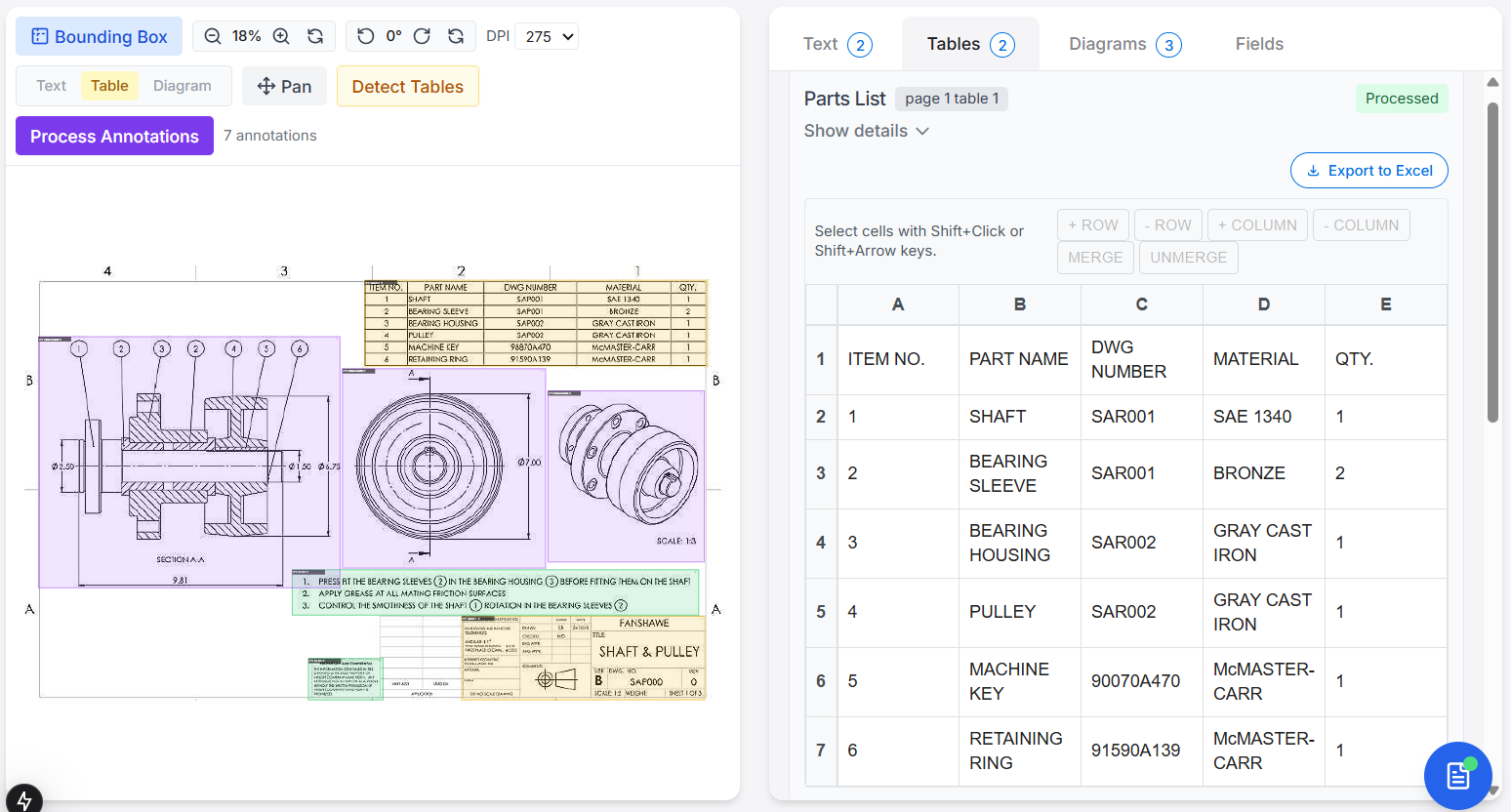
Using a multi-agent pipeline (layout detection, specialized OCR, and domain reasoning), the system extracts both values and semantic relationships, identifying which tolerances are critical and how they connect to specific features.
ADEOS: Agentic AI Architecture for Engineering Document Intelligence
The resulting structured engineering data can serve as a common reference layer for downstream manufacturing and quality systems.
This creates the foundation for a digital pipeline, where drawing data is no longer copied repeatedly but referenced and synchronized.
That foundation is what makes the next step possible:
1. Unified Engineering Data Layer
Instead of teams going through multiple PDFs, downstream systems consume engineering information from a common source. The system detects modifications at the drawing level, identifies impacted downstream processes, and automates revision-driven updates when changes occur.
2. Automated PFMEA & Risk Updates
Once structured engineering data is available, the same foundation can be extends to PFMEA workflows.
Auto-population of Functions & Requirements:
- When a drawing revision occurs, AI agents detect changes and trigger targeted PFMEA review and update workflows.
- Example: Extracted characteristics such as “Ø25.00 ±0.05” on a shaft can be linked to potential failure modes like “Out of tolerance diameter” and resulting assembly interference.
Historical Knowledge Integration:
- A manufacturing intelligence system references previous FMEAs, engineering changes, and shopfloor records to suggest realistic causes and effects.
- Rather than recreating risk assessments from scratch, engineers can leverage accumulated organizational knowledge to improve consistency and speed.
Such a system does not replace existing engineering, quality, or FMEA tools. Instead, it acts as an intelligent data layer between them, transforming a manual manufacturing bottleneck into a more automated and traceable workflow.
Closing Thoughts
Manufacturing has spent decades building systems that manage information. The next challenge is building systems that understand it.
Engineering drawings already contain the information required to drive quality, manufacturing, procurement, and compliance processes.
What is missing is the intelligence layer that can interpret engineering intent, understand relationships, and connect changes to operational decisions. This layer does not replace ERP, PLM, MES, QMS, or existing engineering tools. Instead, it acts as a connective bridge between them.
At Coffee Inc., we are building ADEOS around these capabilities combining engineering document understanding, contextual reasoning, and workflow integration.
To learn more about ADEOS or explore how these capabilities apply to your organization, contact us at coffee@coffeeinc.in or visit adeos.coffeeinc.in.