Read with Claude
 Read with ChatGPT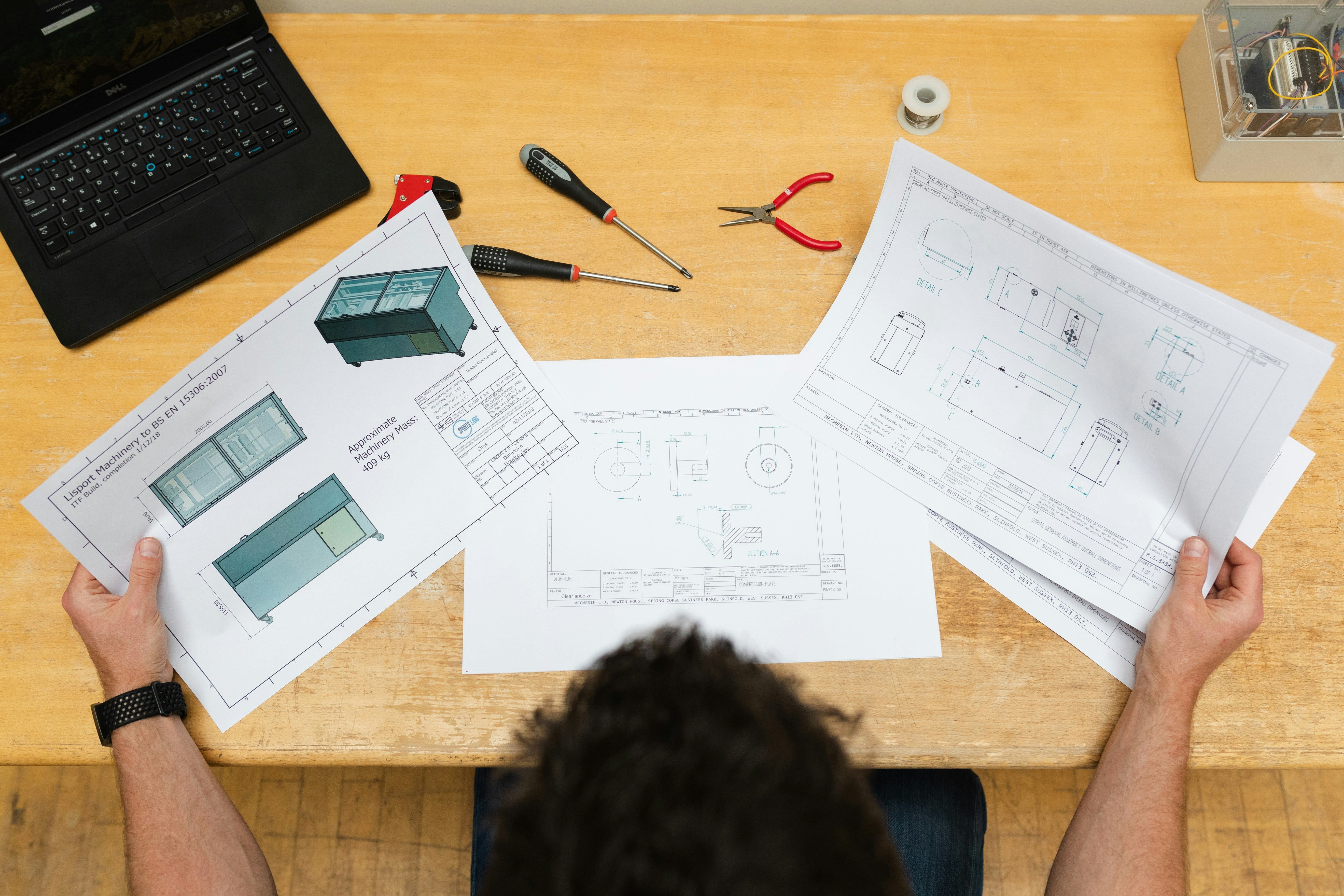
Manufacturing organizations generate enormous amounts of information.
Product specifications, CAD models, BOMs, process sheets, inspection reports, machine logs, maintenance records, quality data, supplier information, and engineering changes flow through enterprise systems every day.
Photo by ThisisEngineering on Unsplash
For decades, the challenge appeared to be collecting and storing this information. Today, most manufacturers have more data than they know what to do with.
Yet when a production issue emerges, an engineer often still spends hours gathering information from multiple systems, speaking with different teams, and reconstructing the history behind a decision.
The problem is no longer data availability. The problem is understanding how information relates.
Knowledge Exists Across Connected Systems
A production issue rarely exists in isolation.
A dimension mismatch may connect to supplier batches, tooling conditions, maintenance schedules, inspection reports, engineering changes, PFMEA assumptions, and previous corrective actions. Every manufacturing decision carries dependencies that extend across departments and systems.
An experienced engineer may know why a particular tolerance was chosen. A quality manager may remember the investigation behind a recurring issue. A production supervisor may understand the conditions that consistently create process variation.
These insights often exist outside structured systems. Most enterprise environments distribute this knowledge across:
- ERP platforms
- Quality systems
- Maintenance records
- Spreadsheets
- Emails
- Internal discussions
- Supplier communication
The challenge is not the absence of data. The challenge is preserving relationships between the data.
Workflows Added Structure, Not Understanding
The next evolution introduced workflows.
Change requests moved through approval paths. Deviations followed review processes. Corrective actions were tracked and assigned. Releases became governed through formal procedures.
Workflows improved consistency and accountability. They also created visibility into how work moved through the organization. Yet workflows primarily describe movement. They do not necessarily preserve understanding.
Two engineering changes may follow identical approval processes while having completely different operational implications. Two quality investigations may close through the same workflow while revealing entirely different lessons about the manufacturing process.
The process becomes documented. The reasoning often remains fragmented.
Operational Relationships Create Context
As organizations scale, retirements occur, teams change, and facilities expand, this knowledge becomes increasingly difficult to retain.
Operational relationships provide a mechanism for preserving more than documentation. They preserve continuity.
Instead of viewing information as isolated objects moving through workflows, these systems capture how events, decisions, processes, and outcomes influence one another over time.
This means preserving connections between:
- Product structures and production outcomes
- Engineering decisions and quality performance
- Supplier changes and manufacturing variation
- Corrective actions and future deviations
- Process assumptions and operational results
- Workflow activity and business impact
These relationships create context. Context creates understanding. Understanding creates better decisions.
AI Is Accelerating the Need for Connected Systems
The rise of AI has exposed the limitations of fragmented information architectures. AI systems can summarize documents, answer questions, and retrieve records with remarkable effectiveness.
However, manufacturing decisions rarely depend on a single document. They depend on understanding how multiple events connect across time.
An AI system investigating a production issue may need awareness of:
- Historical deviations
- Supplier performance
- Engineering revisions
- Maintenance activity
- Inspection trends
- Corrective action outcomes
- Production performance over time
Without relationships, AI becomes a sophisticated search tool. With relationships, AI begins operating with context.
From Systems of Record to Systems of Understanding
For decades, enterprise software focused on recording activity. The next generation of manufacturing systems is increasingly focused on understanding activity.
This shift does not replace PLM, ERP, MES, or QMS platforms. It builds on them.
Systems of record remain essential because they capture operational events and business transactions. What is changing is the ability to connect those events into a broader operational narrative.
The objective is not simply knowing what happened. The objective is understanding why it happened, what influenced it, and what it may affect next.
Conclusion
Manufacturing systems have evolved from managing files to managing workflows. The next step is managing relationships.
Products are shaped by thousands of interconnected decisions made across engineering, quality, production, procurement, and service. The challenge is no longer capturing these decisions. Most organizations already do that. The challenge is preserving the context that connects them.
As AI becomes a larger part of manufacturing operations, this challenge becomes even more important. Intelligence is only as useful as the context available to it. Files provide information. Workflows provide structure. Relationships provide understanding.
The next generation of manufacturing systems will be defined by their ability to connect knowledge across the product lifecycle and transform fragmented information into operational understanding.
Because the future of manufacturing is not built on more records.
It is built on better relationships between them.
If you are interested in discussing the future of context-aware manufacturing systems, intelligent workflows, or AI driven engineering operations, reach us at coffee@coffeeinc.in or visit us at https://coffeeinc.in.