Read with Claude
 Read with ChatGPT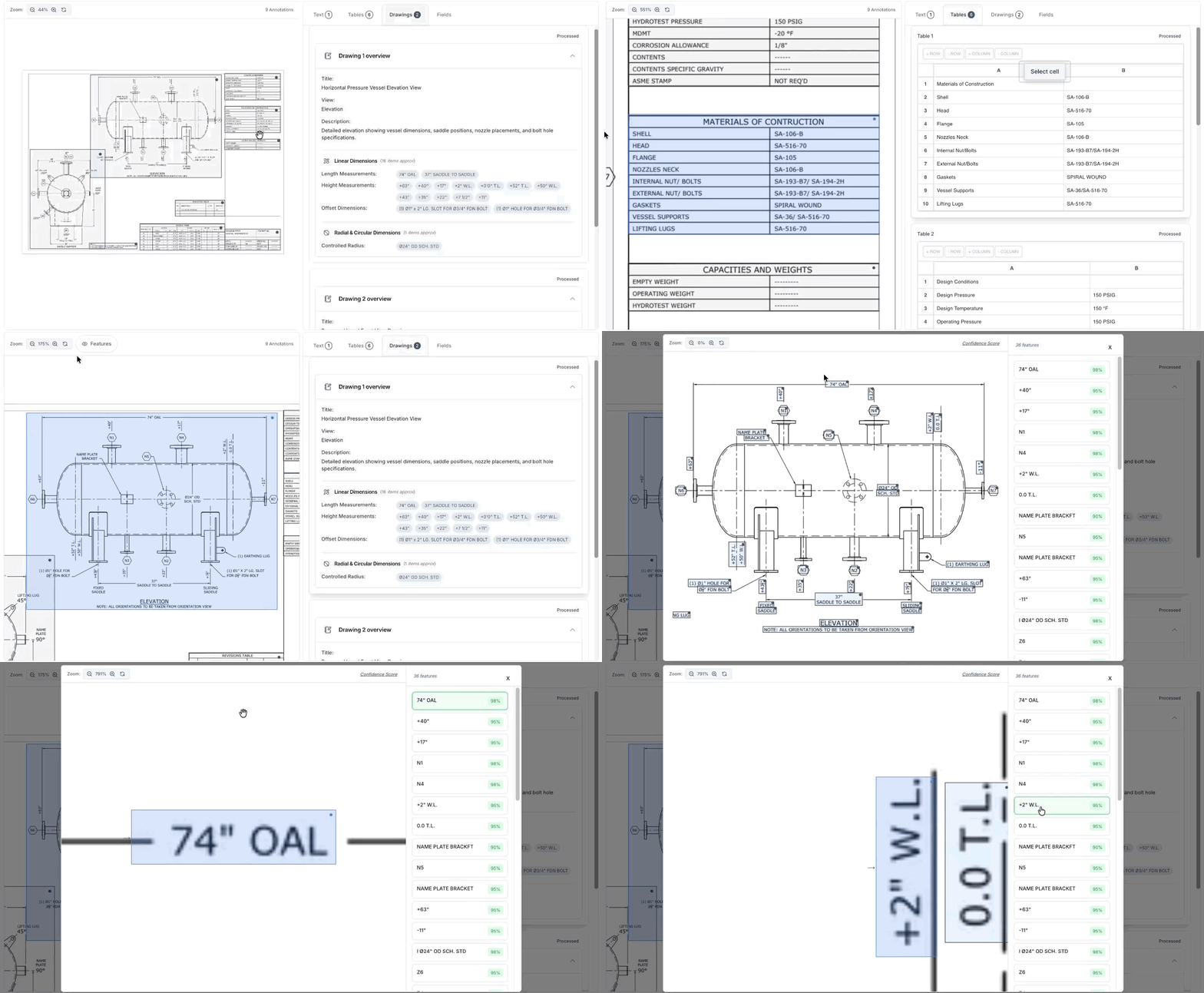
Consider this scenario: Your EPC firm just won a ₹500 crore water treatment infrastructure project. Scope finalized. Timeline agreed. Then the vendor drawings arrive: 2,400 PDFs, some scanned, barely legible, with no structured data, no searchable text, and no BOM that your procurement team can actually use.
Engineering Drawing Extraction
Someone has to read every single one of them. Manually.
“We had three engineers whose entire job for six months was reading vendor drawings and re-entering data into Excel.”
~ Procurement Head, Mid-size EPC Firm
This is the standard operating reality for EPC and infrastructure firms across India and globally. And it is costing your business far more than you realize.
Where the Losses Actually Accumulate
Manual drawing digitization does not just cost time. It creates compounding risk across the entire project lifecycle. Here is where EPC firms consistently absorb hidden losses:
- Procurement errors from incorrect BOM data: wrong material specifications, quantities, or part numbers leading to re-orders and site delays
- Engineering rework when dimension or tolerance data is misread: a single misread GD&T callout on a structural weld can mean weeks of rework on site
- Compliance failures when title block information, revision numbers, approval dates, and specification codes, is incorrectly captured
- Knowledge silos when drawing data lives in individuals’ heads rather than structured, queryable systems
- Audit and handover delays when project closeout requires reconciling drawing registers manually against as-built documentation
In large infrastructure projects, these compounding costs often exceed 3–5% of total project value. For a ₹200 crore project, that is ₹6–10 crore in avoidable losses: losses that are directly traceable back to how drawing data was managed from day one.
What AI-Powered Extraction Actually Solves
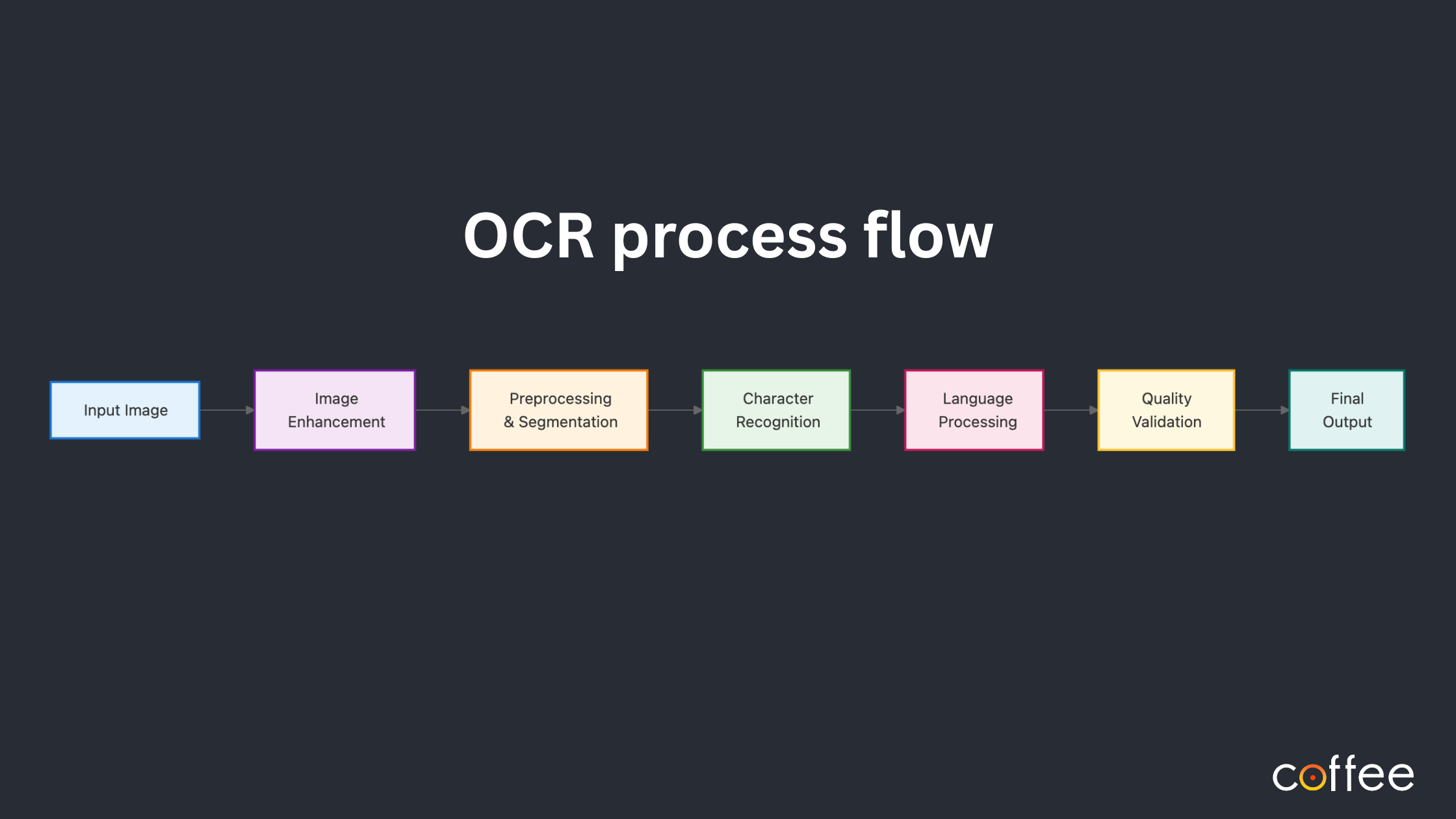
ADEOS is not a generic OCR tool. It is a domain-specific AI platform built exclusively for engineering drawings, trained to understand the structure and language of technical documentation at the level a senior engineer would.
For EPC firms specifically, this means:
- Title block extraction: project number, revision status, approval authority, drawing date, and specification references captured automatically from every drawing
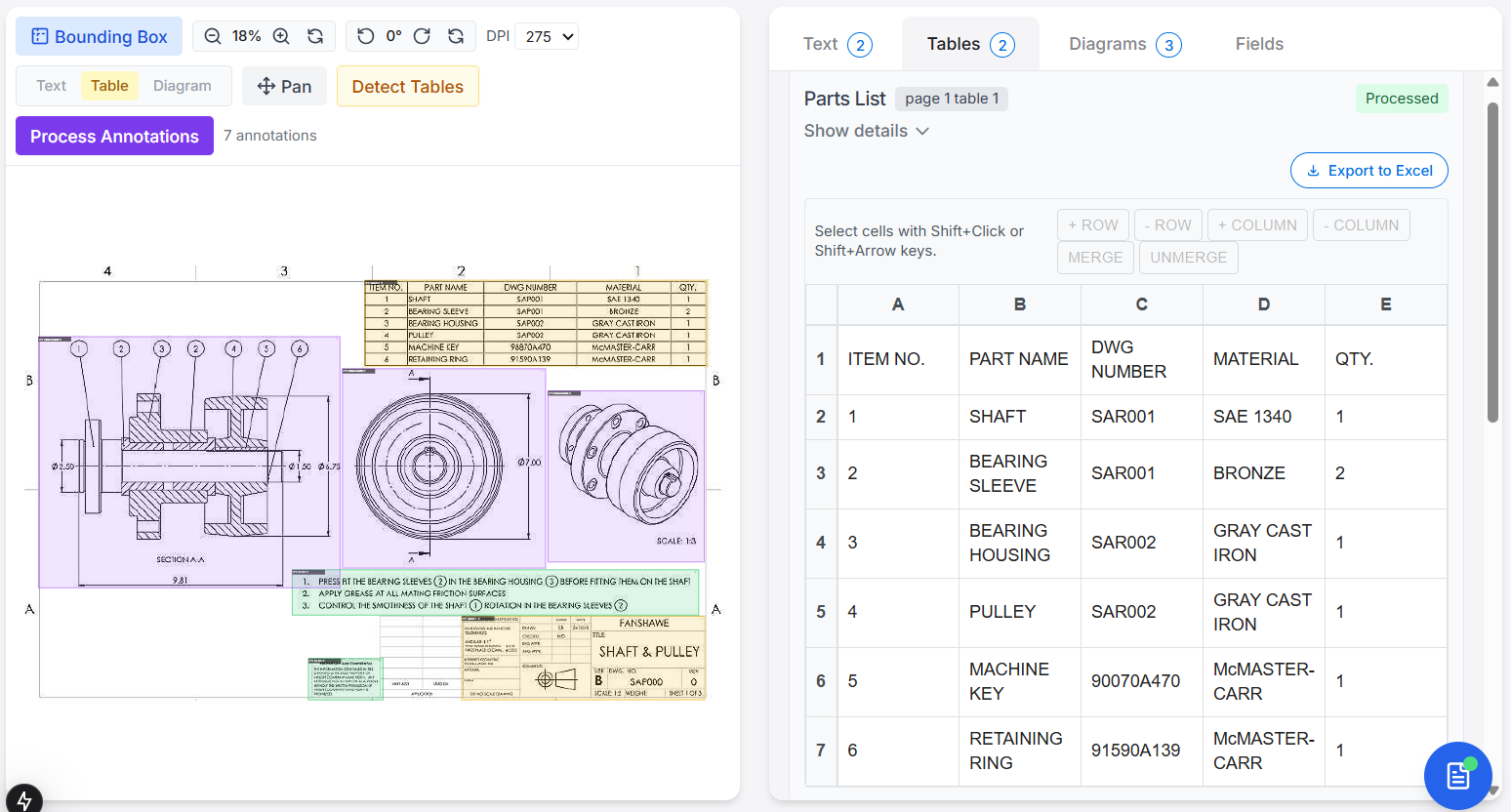
- BOM table extraction: line-by-line part numbers, descriptions, quantities, materials, and standards pulled into structured, exportable formats
- Dimension and tolerance extraction: view-based segmentation that understands which dimensions belong to which view, with GD&T callout recognition
- Automated ballooning: every dimension mapped to a numbered callout, with bidirectional linking between annotations and geometry, exactly as inspection software does it
- Supplementary table extraction: fluid lists, pipe schedules, cable schedules, and equipment lists extracted from legacy drawings regardless of format quality
ADEOS achieves 98% extraction accuracy with a 70% reduction in processing time compared to manual workflows: validated across marine, oil & gas, EPC, and manufacturing drawing types.
The Business Case: Three EPC Scenarios
Scenario 1: Vendor Drawing Onboarding
A large EPC firm receives 3,000 vendor drawings during the procurement phase of a highway infrastructure project. Manually, this requires a team of five engineers working full-time for three months.
With ADEOS: Same 3,000 drawings processed in under two weeks. Structured BOM data, title block information, and key dimensions are available in your ERP system before procurement decisions are finalized: not after.
Scenario 2: Legacy Drawing Digitization
An infrastructure firm inherits a legacy drawing archive of 15,000 scanned documents as part of an asset acquisition. Making these drawings usable for ongoing maintenance and operations is a prerequisite for the project handover.
With ADEOS: Automated batch processing converts the entire archive into structured, searchable data. What would take a dedicated team 18 months is completed in 6–8 weeks, with consistent accuracy across every document.
Scenario 3: Multi-Vendor Reconciliation
An EPC project manager needs to cross-reference specifications across 200 vendor drawings from 12 different suppliers to verify compliance before commissioning. Each drawing uses different formats, different title block layouts, and different annotation conventions.
With ADEOS: All 200 drawings are extracted into a normalized data schema. Cross-referencing that previously required a specialist engineer taking two weeks is completed in hours, with a full audit trail.
Integration Without Disruption
One of the most consistent concerns we hear from EPC procurement and engineering heads is this: “We already have systems in place. We cannot afford a rip-and-replace.”
ADEOS is built to integrate: not replace. The platform supports:
- Manual workflow mode: upload drawings, review extractions, export to Excel or your existing ERP in minutes
- Automated API access: integrate ADEOS directly into your document management system or PLM platform for fully automated extraction pipelines
- Graduated autonomy: critical drawings validated by engineers before export; routine drawings processed fully automatically
- Multiple export formats: structured Excel, JSON, CSV, and direct ERP-compatible outputs
Your existing workflows do not change. ADEOS simply removes the most expensive step from them.
The Investment vs. Return
ADEOS is priced for the Indian EPC market, with starter plans for smaller firms and enterprise plans for organizations with large-volume drawing processing needs. For context:
- A single prevented procurement error, one mis-specified valve or one incorrect pipe schedule, typically costs more than an annual ADEOS subscription to rectify on site
- At 1,000 drawings per month, the platform pays for itself within the first processing cycle
- For firms processing 5,000+ drawings per month, the ROI is measurable within the first 30 days
The question for EPC firms is not whether AI-powered drawing extraction delivers ROI. The question is how much longer your firm can afford to operate without it.
What to Do Next
If your firm is currently managing vendor drawing digitization manually, or if your legacy drawing archive is inaccessible, unstructured, or unreliable, ADEOS can demonstrate measurable value within a single pilot engagement.
We offer a structured pilot program specifically for EPC and infrastructure firms:
- Upload up to 50 drawings from your active project
- Receive fully extracted, structured data outputs within 48 hours
- Review accuracy against your own ground truth: before any commercial commitment
To request your pilot or schedule a live demonstration, contact us at coffee@coffeeinc.in or visit adeos.coffeeinc.in.