Read with Claude
 Read with ChatGPT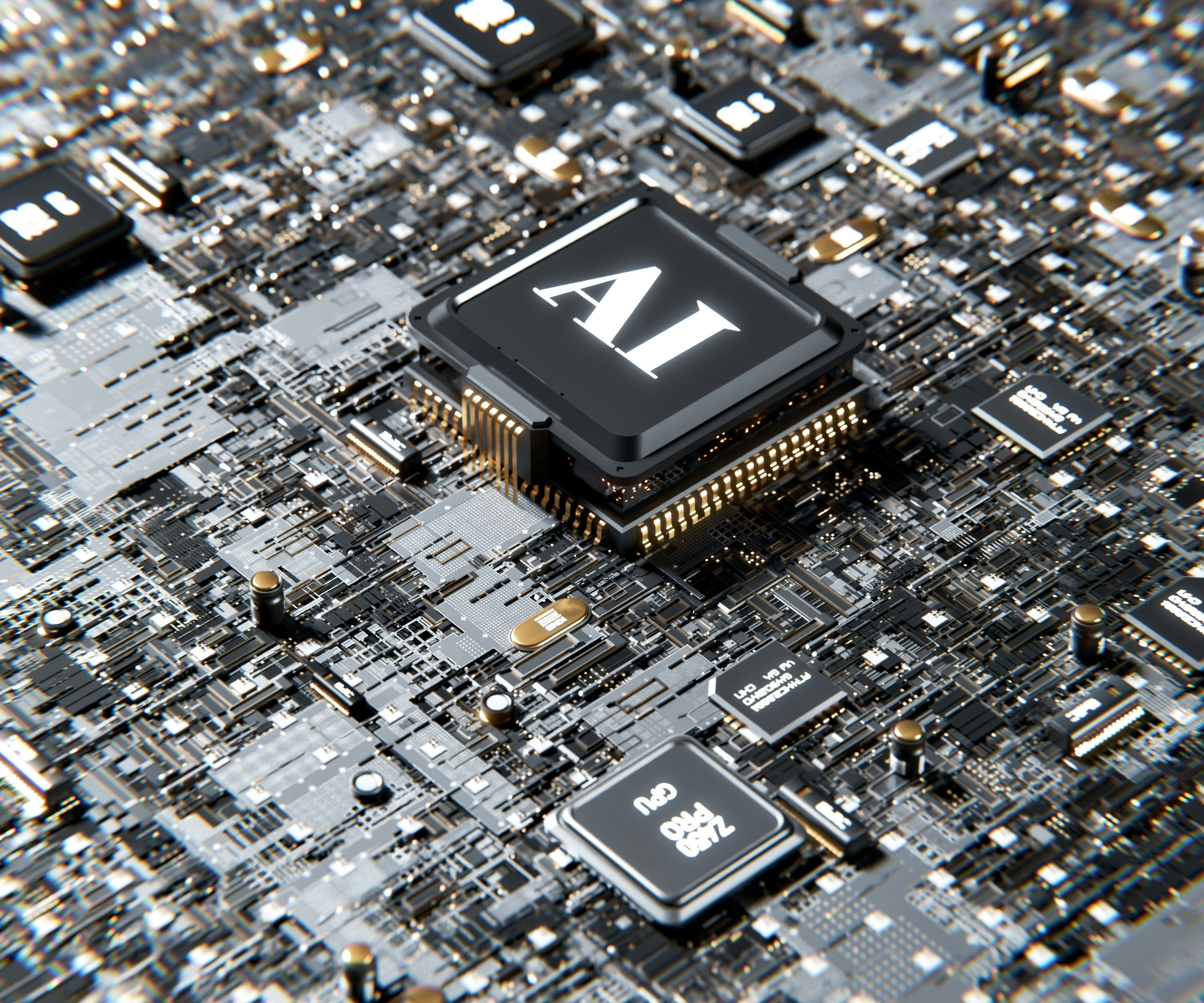
Every B2B product today seems to wear an AI label. AI-powered analytics. AI-assisted workflows. AI-enabled platforms. AI-driven decision-making. The list keeps growing. These words are everywhere, in pitch decks, landing pages, sales calls, and investor updates. Yet when customers ask a simple question, “What will this actually change for me?”, the answer is often unclear.
Photo by Igor Omilaev on Unsplash
The problem is not the technology. The problem is the narrative. AI discussions are dominated by features and terminology, while buyers care about accuracy, time saved, and business outcomes. To move the conversation forward, we need to understand what these AI verbs actually mean, and more importantly, what outcomes they should deliver.
Why AI Verbs Exist in the First Place
These terms exist to describe how deeply AI is involved in a product’s workflow. They are meant to signal levels of automation, responsibility, and decision ownership. In theory, they help customers understand risk, control, and expected impact. In practice, they often blur together, especially when marketing teams treat them as interchangeable.
Clarity matters because each term implies a different outcome. Confusing them leads to mismatched expectations, broken trust, and AI initiatives that fail to show real value.
1. AI-Driven: Outcomes Owned by the System
When a product is AI-driven, AI is responsible for decisions and execution. The system does not just suggest, it acts. Human involvement is minimal and usually supervisory.
Example
- Automatic credit approvals where AI evaluates risk and approves or rejects applications without manual review
- Dynamic pricing systems that continuously adjust prices based on demand and supply signals
Outcome expectation
- Maximum speed
- Consistent execution at scale
- Reduced operational dependency on humans
Accuracy is measured against historical performance and predefined thresholdsm not subjective judgment.
If frequent human intervention is required, calling the system AI-driven creates false expectations and operational risk.
2. AI-Powered: Intelligence at the Core
AI-powered products rely on AI as their core capability. Without AI, the product loses its primary value. Outcomes here are typically predictive or analytical in nature, forecasting, classification, anomaly detection, or reasoning.
Examples
- Demand forecasting systems predicting inventory needs weeks in advance
- Document classification engines that extract structured data from unstructured files
- Fraud detection engines flagging anomalies across millions of transactions
Outcome expectation
- High accuracy
- Reliable predictions
- Better decision quality
These tools are judged less by UI and more by error rates, confidence levels, and consistency.
3. AI-Augmented: Intelligence as a Multiplier
AI-augmented, on the other hand, focuses on enhancing human performance. AI provides insights, context, or prioritization, but the final decision remains with the user. The outcome is not full automation, but better decisions made faster.
Examples
- Sales tools that rank leads by likelihood to convert
- Contract review systems that highlight risky clauses but don’t approve contracts
- Engineering review tools that flag potential issues in drawings
Outcome expectation
- Faster decisions
- Higher confidence
- Reduced oversight effort
The mistake many teams make is presenting augmented systems as autonomous. This leads to disappointment when users realize the AI improves judgment but does not replace it.
4. AI-Orchestrated: Intelligence Across the Workflow
AI-orchestrated systems use AI to coordinate workflows across tools, teams, or processes. The value here is not intelligence in isolation, but end-to-end efficiency.
Examples
- Procurement systems that automatically route approvals, follow-ups, and escalations
- Customer support platforms that assign, prioritize, and resolve tickets across channels
- Project workflows that auto-trigger downstream actions based on upstream changes
Outcome expectation
- Reduced handoffs
- Fewer delays
- Smoother, faster execution
Here, AI succeeds by removing friction, not by showcasing intelligence.
5. AI-Infused: Multiple touchpoints
AI-infused products embed AI across multiple touchpoints rather than a single feature.
Examples
- CRM systems where AI assists in lead scoring, follow-up reminders, churn prediction, and reporting
- Document systems where AI helps in classification, search, validation, and compliance checks
Outcome expectation
- Incremental accuracy improvements
- Time savings across the lifecycle
- Better overall experience
These systems deliver incremental improvements in accuracy and speed across the entire lifecycle, not one dramatic transformation.
6. AI-Assisted: Supporting the user
AI-assisted tools sit at the lightest end of the spectrum. They help users work faster or with less effort, but they do not own outcomes.
Examples
- Writing suggestions in emails or reports
- Auto-filled forms based on past inputs
- Suggested responses in customer communication tools
Outcome expectation
- Time saved per task
- Reduced manual effort
These tools succeed when they feel helpful, not when they pretend to be autonomous.
7. AI-Enabled: Capability Without Guaranteed Outcomes
AI-enabled is often misunderstood. It means the system can support AI integrations or extensions, not that AI is actively delivering results. The outcome here is flexibility and readiness, not immediate value.
Examples
- ERP systems that allow AI plugins
- Platforms exposing AI APIs for custom models
- Tools that “support AI” but require significant setup
Outcome expectation
- Flexibility
- Future readiness
These platforms are important foundations, but positioning them as transformational leads to confusion. AI-enabled does not mean AI-effective.
The Real Problem: Feature-Led Narratives Instead of Outcome-Led Thinking
When AI is marketed through features, models, dashboards, buttons, and buzzwords, the real value gets lost. Customers do not buy AI because it is sophisticated. They buy it because it delivers measurable improvements.
The right questions are simple:
- How much time does this remove from the process?
- How accurate is the outcome compared to manual work?
- How much effort, cost, or risk does it eliminate?
If these questions are unanswered, the AI label is irrelevant.
Closing Thoughts
The market’s obsession with AI labels is understandable. New technology always arrives wrapped in new language. But language is only useful when it clarifies value , not when it distracts from it. In B2B, the difference between AI-driven and AI-assisted is not semantic; it determines accountability, risk, adoption speed, and ROI.
What ultimately matters is not how intelligent a system sounds, but what reliably improves because it exists.
The future of AI products will not be decided by who uses the most impressive terminology, but by who delivers the most reliable results, in the least amount of time.
At Coffee, we work on AI systems designed around accuracy, speed, and real business outcomes, not just features. If you are evaluating a tool or interested in integrating AI to your processes, reach out to us at coffee@coffeeinc.in.