Read with Claude
 Read with ChatGPT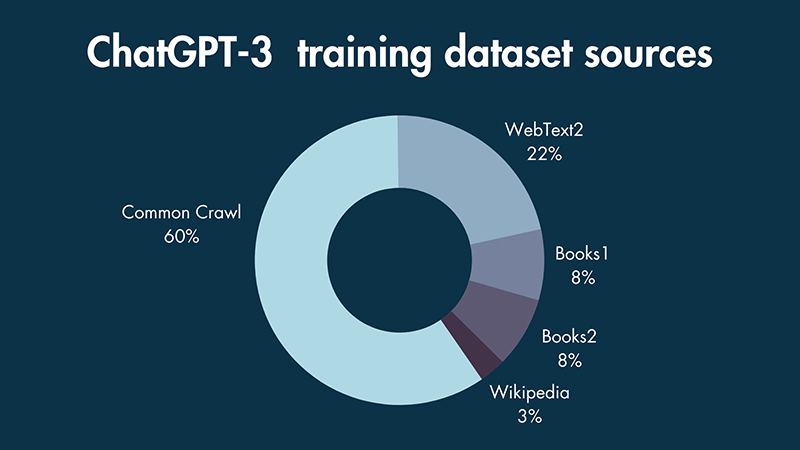
In the process of developing AI systems or models, we generally know some key components involved such as data, algorithms and training compute. Over the decade, the process in the pipeline of developing AI is changing over time. We are training larger models now; They need more data; thus requires higher compute resource.
Compute and algorithms are ever evolving and can be expanded as required. But, the major component that can restrict or enhance the training process are data and compute. Data is very crucial factor in training AI models. The data should be in large amount, as well as in high quality.
The data paradigm
The data that is used to train models are highly valuable. The neural network models craves for data. It just needs lot more data, and in high quality. Collecting the high quality data is often the problems in any fields (i.e, text, images, audio). In fact, raw dataset containing several hundred thousands data samples will results less in performance than the dataset contains 30% high quality samples compared to that.
OpenAI has already used almost every data in the world to train their GPT series models. But the interesting point is, they continued training their models and still make the new model better at benchmarks / evaluation than their previous models.
How they can deliver better performance in their newer models compared to older models, even though they have already used entire data from world when they built previous models itself? This isn’t always about changing how the model works, such as making it bigger or building new methods to learn better.
Synthetic data to the rescue!
Alright! We know data should be in large amount and in high quality. In the case of data scarcity and inaccessibility due to privacy concerns, synthetic data was introduced and came to help training models with reliable data.
Synthetic data is the data that is being generated by AI instead of conventional data generated manually by humans. Recent LLMs are being trained with synthetic data generated by other LLMs.
How does synthetic data training work?
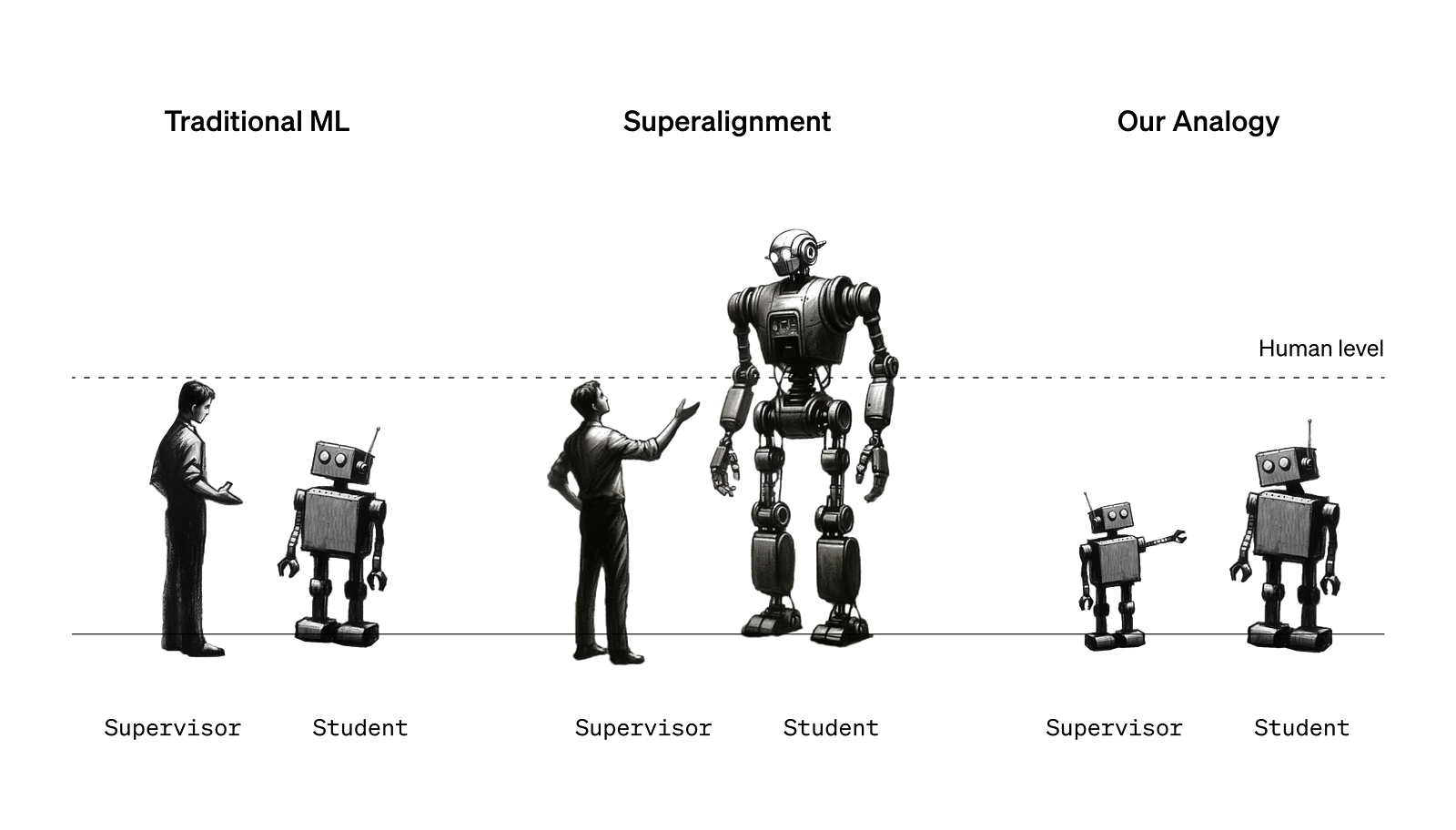
From the openai blog post “Weak-to-strong generalization”
There are two levels in how training with synthetic data works:
- The training samples are collected by bigger models such as Claude, Chatgpt, etc. to train smaller models. In this case, we can train a language model with the data that is being generated by another language model which is often more capable than that. This is called model distillation.
- Alternatively, the smaller model trains the larger model to become more capable than that. This is more interesting aspect of the synthetic data. We usually know the neural networks tries to imitate the training set but here the larger model learns the intent of the supervisor (smaller model), but not to imitate its mistakes as it is.
Unlike the traditional machine learning training methods, this approach trains the model in smaller, more careful steps. It uses a special method to guide the student model to not rely too much on copying the supervisor model, encouraging it to develop its own understanding and learn better. This case applies when we try to train next generation models by using previous generation models.
Benchmarking
The effectiveness of synthetic data in training AI models can be evaluated through benchmarking. Benchmarking involves assessing a model’s performance on standardized tests or real-world tasks to measure its capability and improvements compared to previous iterations.
A language model can understands languages and generate accordingly, but the task it does is plenty: ranging from coding, extract data to robots. So there are many benchmarks available to test these language models at various tasks such as language understanding (MMLU), reasoning (ARC), coding (HumanEval) and math (MATH).
Consider a question-answering task, which contains fixed answers that won’t vary (much). This could be a classification task or multi-choice answering, where the answer is selected from a fixed list, so we can easily match the generated output with the ground truth to calculate the metrics (accuracy).
But in other real-world scenarios, we need to collect huge amount of data samples for evaluating the desired task. This data is more open-ended, doesn’t have any defined structure. Its hard to set the logic for that to evaluate or use humans to evaluate, and human annotators are costly. That is where LLMs themselves come in. They can actually evaluate the outputs generated by another LLM or by itself.
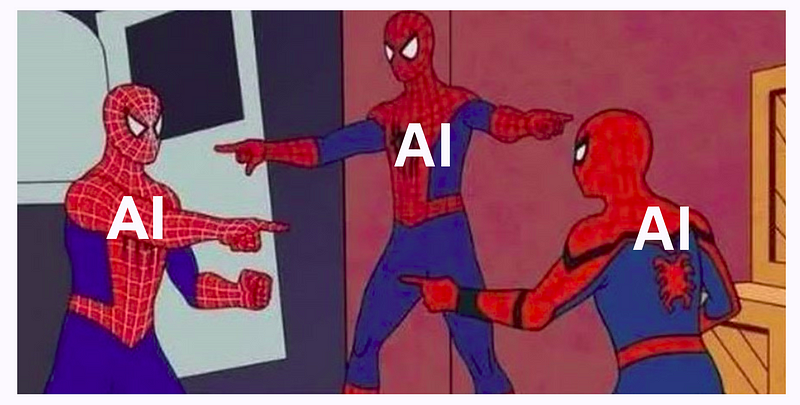
So, now we have two major use cases where AI helps itself:
- Synthetic data creation, and
- Benchmarking
There are Challenges, ofc
While using AI may help in augmenting and enhancing a model’s effectiveness, there are downsides with AI to AI.
Bias in llm evaluation
The models tend to show bias when its evaluating its own outputs. Lets take solving a math problem, where a problem was given. The model start reasoning and gives a solution. Assume that solution what it gave is wrong. Most of the time, when the models see the steps its reasoned, there are more chances that it thinks its going in the right way!
Data Quality
Poorly generated synthetic data can lead to negative transfer, where the model learns inaccurate and irrelevant patterns.
Compute Cost
Generating synthetic data at scale requires significant computational resources, which may offset its cost-effectiveness in some cases.
Constant Vigilance is key
To avoid such situations, it is recommended to pass only the question you asked and the final solution it gave, but not the steps it generated to solve that problem. The explanation of the model from the wrong solution somehow convincing the model to believe that it is true (Bruhh we haven’t achieved AGI yet).
But more capable models (i.e., claude 3.5 sonnet, o1) do identify its mistakes by giving its steps or reasoning. It is pretty interesting that how we are training, scaling and evaluating all by using AI systems.
Conclusion
If you work with AI, you would have come across the word Anthropic for sure. It is, after all, the company behind Claude.ai, valued at 40 billion dollars, challenging the big beast that is Open AI.
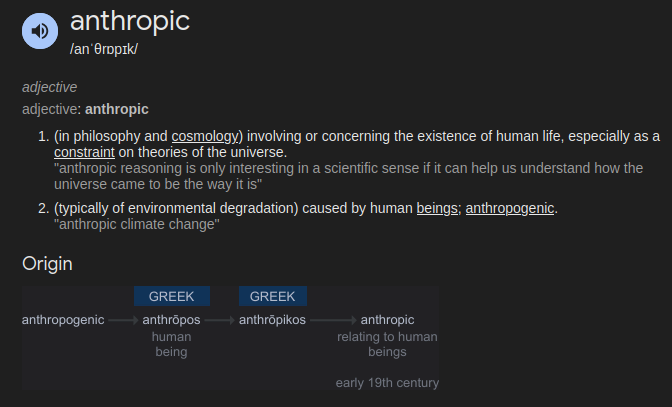
Anthropic means humanish or humanlike. So while the models try to achieve human like intelligence, AI seems to be using itself to get better. We, on the other hand, are starting to use AI systems blindly for tasks that actually require human thinking like writing and coding. This creates a loop where we become too dependent on AI, losing our own ability to think or solve problems.
As a result, we stop asking other people for feedback, which can lead to a negative outlook on humanity, often called “misanthropy.” It’s important to stay aware of this risk and remember that human insight, creativity, and connection still matter, no matter how advanced AI gets.