 Read with Claude
 Read with ChatGPT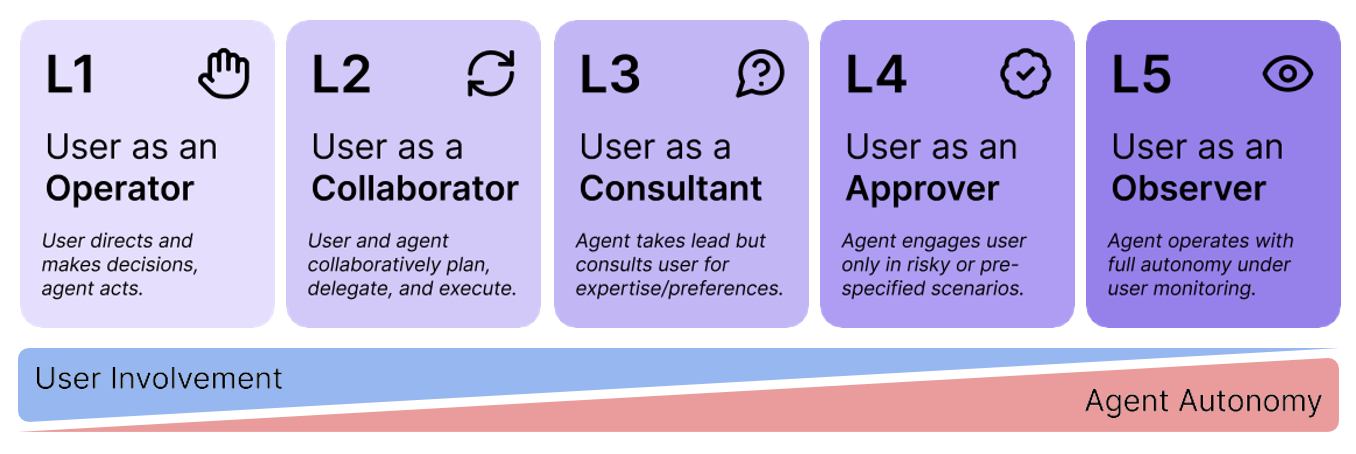
Featured
The term “agentic AI” now appears everywhere in software marketing. Every AI vendor now claims their product is agentic, autonomous, or agent-powered. There are so many words for it now, but it is not as clear as it appears.
This creates a problem. Business leaders evaluating document intelligence systems are told that agentic AI will change their workflows, but they are not told what level of autonomy these systems operate at, what decisions the AI makes independently, and where human judgment remains essential.
Autonomy is not binary. An AI system that extracts data from engineering drawings does not operate the same way as a chatbot that answers customer questions or a code generator that writes software. The level of autonomy required differs based on the problem, the acceptable error rate, and the consequences of mistakes.
This article examines agentic AI through a practical lens: document intelligence for engineering drawings. It explains what agentic AI means beyond the marketing language, introduces a framework for understanding autonomy levels, and demonstrates why document intelligence systems like Adeos require a specific autonomy design to deliver reliable results.
What Agentic AI Actually Means
Agentic AI refers to systems that can perceive their environment, reason about what they observe, act to achieve goals, and learn from outcomes. The term distinguishes these systems from traditional AI that simply responds to prompts or follows predefined rules.
An agentic system operates through a cycle: perceive the environment, reason about what action to take, execute that action, and learn from the result. This cycle repeats until the system achieves its goal or encounters a condition it cannot resolve.
The key distinction is intentionality. An agentic system does not just process input and produce output. It forms an intention about what needs to happen next, then acts on that intention. The intention may come from analyzing the environment, from internal rules about what constitutes success, or from learned patterns about what works.
Traditional AI systems wait for instructions. Agentic systems take initiative.
But initiative alone does not define how autonomous a system is. A system can be highly agentic, capable of perceiving complex environments and taking sophisticated actions, while still operating under significant human oversight. Autonomy and capability are related but distinct properties.
The Five Levels of AI Autonomy
Levels of Autonomy for AI Agents
Autonomy describes the extent to which an AI system operates without user involvement. The five levels of autonomy based on the role the user plays when interacting with the system.
Level 1: User as Operator
The user directs all decision-making. The AI provides support only when explicitly invoked. The user remains in control of planning, execution, and outcomes.
Systems at this level follow the user through their workflow, offering suggestions or automating small tasks when requested. The AI does not take action unless the user approves it first.
This level suits high-stakes workflows where expertise and accountability cannot be delegated, or situations where the user is developing skills and needs to remain engaged with the work.
Level 2: User as Collaborator
The user and the AI work together. Both can plan, delegate, and execute tasks. Communication between user and AI is frequent and rich.
The AI can work independently on assigned tasks while the user works on others, but the user can intervene at any time to adjust direction, provide input, or take over. The AI transparently communicates progress and blockers.
This level suits workflows where some tasks benefit from automation but others require human judgment or where skill development matters and full automation would undermine learning.
Level 3: User as Consultant
The AI takes initiative in planning and execution. The user provides feedback, preferences, and directional guidance, but does not collaborate hands-on.
The AI consults the user at key decision points, seeks expert input when needed, and adjusts its approach based on feedback. The user cannot directly take control but can pause the AI, request changes, and redirect work.
This level suits complex workflows with many steps where the AI needs to learn user preferences and domain expertise over time, but where human judgment remains essential for certain decisions.
Level 4: User as Approver
The AI operates largely independently. The user only interacts when the AI encounters a blocker it cannot resolve or when consequential actions require approval.
The AI makes decisions, executes plans, and handles obstacles without consulting the user unless absolutely necessary. The user can specify in advance which actions require approval.
This level suits workflows with high volumes of lower-stakes decisions where automation improves efficiency and errors are manageable, but where certain actions — like accessing credentials or making irreversible changes — still need human oversight.
Level 5: User as Observer
The AI operates fully autonomously. The user monitors activity through logs but cannot intervene except by using an emergency shutoff.
The AI plans, executes, adapts, and learns without user input. It resolves blockers independently and modifies its approach when needed.
This level suits environments where user intervention degrades quality or where the system operates in a controlled sandbox with no external consequences. In most business contexts, Level 5 autonomy introduces more risk than value.
Why Document Intelligence Needs Level 3 Autonomy
Document intelligence for engineering drawings requires a specific autonomy design. The problem is too complex for Level 1 or 2 systems, but Level 4 or 5 autonomy introduces unacceptable error risk.
Engineering drawings contain structured and unstructured information spread across complex layouts. Title blocks, bill of materials tables, dimension callouts, geometric tolerances, revision histories, and technical notes all occupy the same page. Tables may be broken across boundaries. Text may be rotated. Lines and symbols may overlap with data. Scanned documents introduce blur, uneven lighting, and digitization artifacts.
The system requires consultation because engineering drawings vary. Standard layouts exist, but companies use custom templates, regional conventions differ, and older documents follow outdated standards. The agents cannot predict every variation.
At Level 1 or 2, the system would require constant user input to make decisions about overlap resolution, anomaly classification, or extraction sequencing. This defeats the purpose — if a user must review every decision, they might as well extract the data manually.
At Level 4 or 5, the system would make all decisions independently. This works when the decision space is well-defined and errors are cheap. But engineering data extraction is high-stakes. Incorrect dimension extraction cascades into manufacturing errors. Misidentified materials result in procurement mistakes. Wrong revision numbers cause teams to work from outdated specifications.
Level 3 provides the right balance. The agents handle the vast majority of extraction work independently, consulting the user only when uncertainty exceeds acceptable thresholds or when domain-specific knowledge is required. The user does not need to understand how the agents process documents, but they remain the authority on what correct extraction looks like for their specific document types.
This consultation happens during system setup and training, not during every document processed. Once the agents learn the patterns for a company’s drawings, they process new documents with minimal intervention. But when a new template appears or an unusual anomaly occurs, the system seeks guidance rather than guessing.
Conclusion
Document intelligence for engineering drawings requires Level 3 autonomy. The problem is too complex for systems that wait for constant user input, but too high-stakes for systems that operate without oversight. Specialized agents that perceive document quality, reason about layout conflicts, act to resolve anomalies, and learn from patterns deliver the right balance of automation and control.
The distinction that matters is not whether a system is called agentic. The distinction that matters is whether the system solves a real problem at the right level of autonomy to deliver reliable results.
When evaluating agentic AI, ignore the marketing language. Focus on what the system does, who remains accountable, what happens when it fails, and what changes for the business.
At Coffee, we are working on Adeos, a data extraction tool that can be used to extract key information from engineering drawings with Agentic autonomy of Level 3 in place. If you are interested to learn more, reach out to us.