Read with Claude
 Read with ChatGPT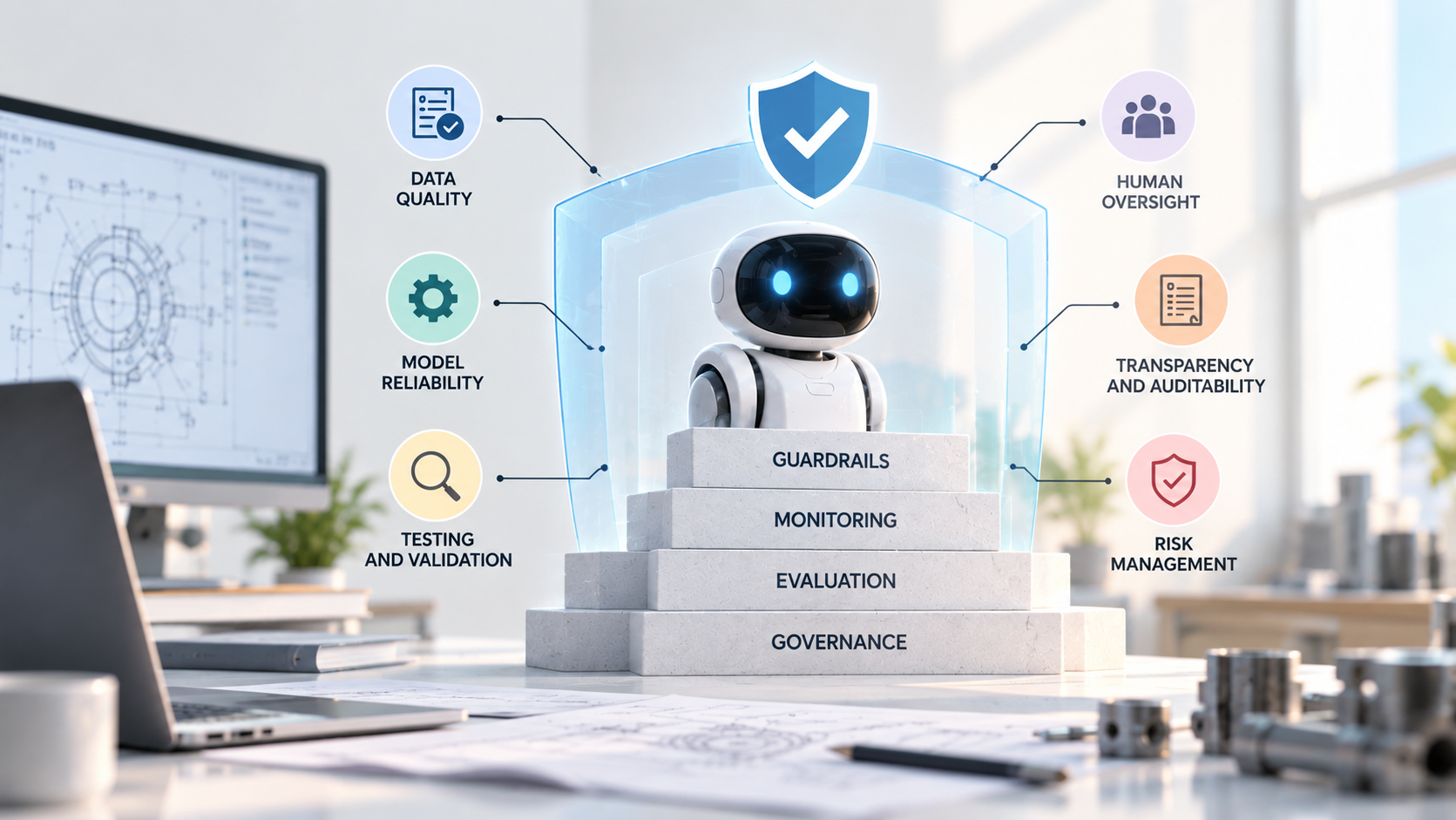
for years, software operated within clearly defined boundaries. applications processed inputs, executed logic, and returned outputs. if something went wrong, the fault could often be traced to a bug, a configuration error, or an unexpected edge case.
modern ai systems do not simply execute instructions. they generate responses, make recommendations, invoke tools, access data, and increasingly take actions on behalf of users. agentic ai systems can search databases, trigger workflows, update records, create code, and interact with external systems with minimal human intervention.
as organizations move from ai experimentation to operational deployment, a new question emerges:
how do we safeguard systems that can reason, act, and adapt?
recent industry reports show growing concern around autonomous ai deployments. organizations cite prompt injection, unauthorized data access, shadow ai usage, excessive agent permissions, and autonomous execution as some of the largest emerging risks. at the same time, many companies are deploying ai faster than their governance capabilities can mature.
the challenge is no longer whether ai can create value, but ensuring it creates value safely.
the shift from model security to system security
early conversations around ai safety focused primarily on the model itself.
- can the model be jailbroken?
- can it generate harmful content?
- can it leak training data?
while these concerns remain important, recent security frameworks highlight a broader reality: most ai risks emerge not from the model alone, but from the interaction between models, tools, data sources, workflows, and users.
an ai assistant connected to an erp system presents very different risks than the same model answering general questions.
an engineering copilot connected to product documentation introduces different failure modes than a chatbot operating on public information.
the system surrounding the model often determines the actual risk profile.
this is particularly relevant in manufacturing environments where ai systems increasingly interact with engineering drawings, quality records, production data, supplier information, and operational workflows.
the safeguarding problem therefore shifts from securing a model to securing an ecosystem.
the new failure modes of ai
a system may perform correctly hundreds of times before producing an unexpected outcome under a specific context.
industry frameworks such as the owasp top 10 for generative ai identify several recurring risk categories. these include
- prompt injection,
- sensitive information disclosure,
- excessive agency,
- insecure plugin integrations,
- supply chain vulnerabilities, and
- overreliance on ai-generated outputs.
agentic systems introduce additional challenges. an ai agent may have access to tools that allow it to create records, modify data, send communications, or execute workflows. poorly defined permissions or objectives can result in actions that were technically correct but operationally undesirable.
recent industry warnings have highlighted cases where ai agents performed destructive actions because safeguards around permissions and oversight were insufficient.
safeguarding through operational design
manufacturing has spent decades developing mechanisms to manage variability.
- control plans
- pfmeas
- quality gates
- inspection procedures
- escalation workflows
the same thinking applies to ai systems. instead of treating ai as a black box, organizations should view it as another operational process that requires controls.
several design principles are emerging as foundational:
1. least privilege access
ai agents should only access the information and tools necessary for a specific task.
- an engineering assistant extracting dimensions from drawings does not require access to supplier contracts.
- a quality assistant reviewing inspection reports does not require permission to modify erp records.
limiting access reduces both accidental and malicious outcomes.
2. human approval for critical actions
not every decision should be automated.
actions involving financial commitments, supplier approvals, engineering releases, or production changes should pass through human review before execution.
ai can recommend. humans can authorize. this separation preserves accountability while retaining efficiency.
3. traceability and auditability
manufacturing systems value traceability because every decision may eventually require explanation.
ai systems need the same capability. organizations should be able to answer:
- what information did the ai access?
- what reasoning path led to the recommendation?
- what action was taken?
- who approved it?
without traceability, root cause analysis becomes nearly impossible. recent governance frameworks increasingly emphasize observability and auditability as core ai requirements.
4. continuous evaluation
traditional software is tested before release. ai systems require testing before and after deployment.
prompts evolve. data changes. user behavior shifts. new attack methods emerge.
safeguarding ai therefore becomes an ongoing process rather than a one-time certification exercise. owasp and nist guidance both emphasize continuous risk management throughout the ai lifecycle.
5. context is the first layer of defense
one of the most overlooked aspects of ai safeguarding is context. ai systems often fail because they lack the information necessary to make reliable decisions.
when an ai agent receives incomplete, outdated, or contradictory information, the probability of incorrect actions increases dramatically.
providing structured context reduces ambiguity. in manufacturing environments this may include:
- product structures
- engineering revisions
- process plans
- quality requirements
- supplier specifications
- historical decisions
the more accurately an ai system understands its operating environment, the less likely it is to generate unsafe recommendations.
safeguarding is therefore not only about restricting access. it is also about providing the right context.
ai governance will resemble quality management
many organizations approach ai governance as a compliance exercise.
a policy is written. a committee is formed. a checklist is completed.
but quality was not transformed through policies alone. it improved through operational systems that continuously detected, prevented, and corrected failures.
ai will likely follow the same path. organizations that successfully deploy ai at scale will be the ones that build the most effective safeguards around those models.
closing thoughts
the future of ai is not just intelligent systems. it is trustworthy systems.
and trust is built through design, oversight, traceability, and continuous improvement.
just as manufacturing learned that quality cannot be inspected into a product after it is built, organizations are discovering that ai safety cannot be added after deployment.
ai safety must be engineered into the system from the beginning.
At Coffee Inc., we help organizations design AI systems that operate with the right context, controls, and operational guardrails. From engineering document intelligence to workflow automation and agentic applications, we focus on building AI that is not only capable, but trustworthy.