Read with Claude
 Read with ChatGPT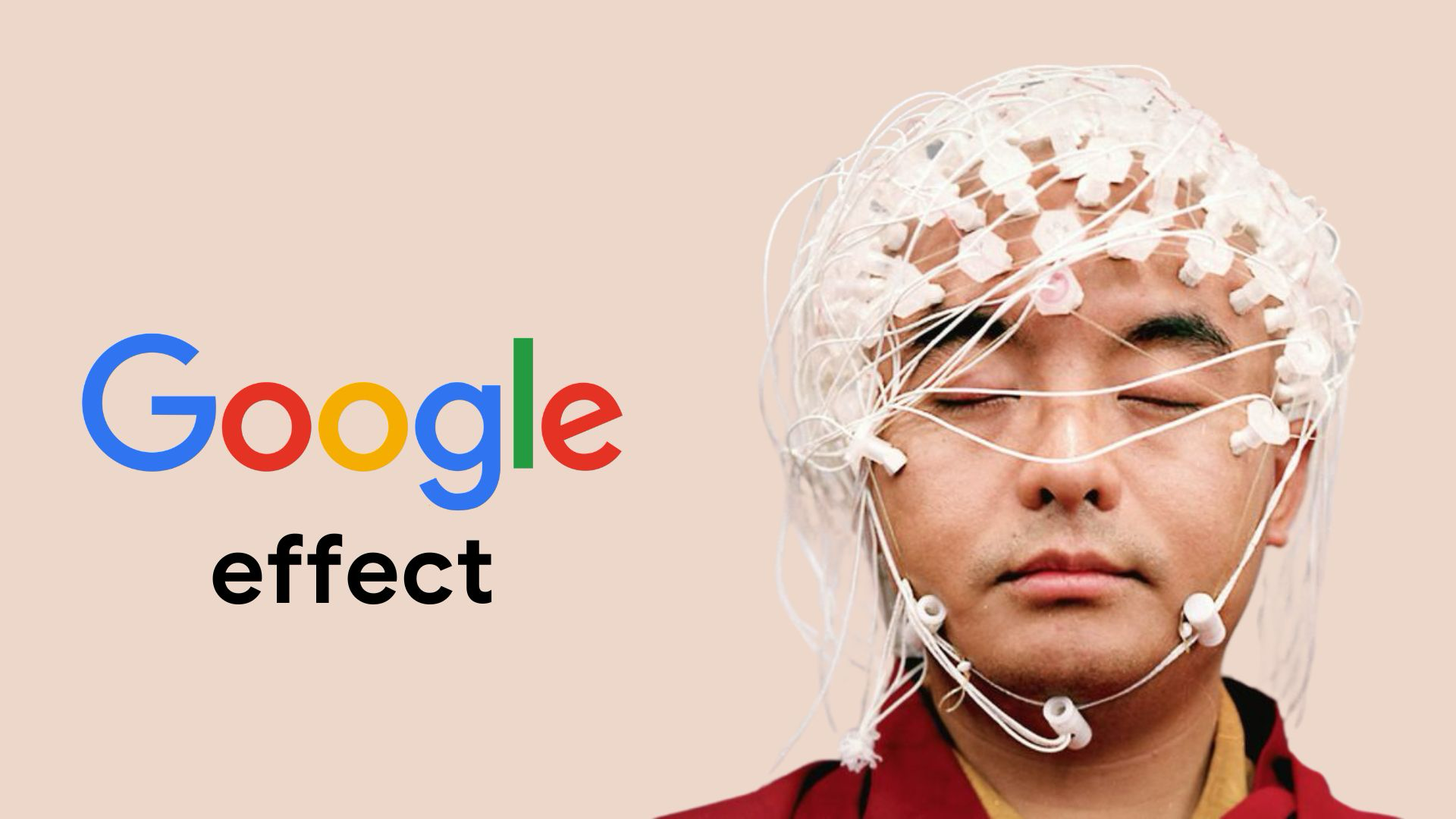
“Why do I keep forgetting things?” — a very acceptable question to Google. But when you think closely, Google itself might be the reason for that. We have readily accessible information about anything that exists (optional) at the tip of our finger. We do not see the need to retain most of the information we see in day-to-day life because we know it is just one search away.
On the basic level, most of us don’t know the contact details of our loved ones by heart. We don’t remember every piece of information we consumed the day before.
Rise of Transactive Memory
The unappreciated aspect of this disordered moment is the rise of transactive memory. To explain simply, you know what topics your friends might have knowledge on. You know where to ask for help if you get stuck in the bank. That is what we call a transactive memory.
Transactive memory is the social understanding of who knows what. We have the collective knowledge even if you don’t know about it firsthand. Through discussions and collaboration, learning what others can offer is an example of transactive memory. It helps us store the memory externally.
The Prime Example
We know Google knows everything, and therefore, use it as our external memory disk. We treat Google as our transactive partner. This helps us with memory off-loading where we are freed from the burden of remembering everything we see and use it efficiently on other cognitive tasks. The modern people can’t remember the information itself but know where to find it, thereby, creating a sense of evolving knowledge.
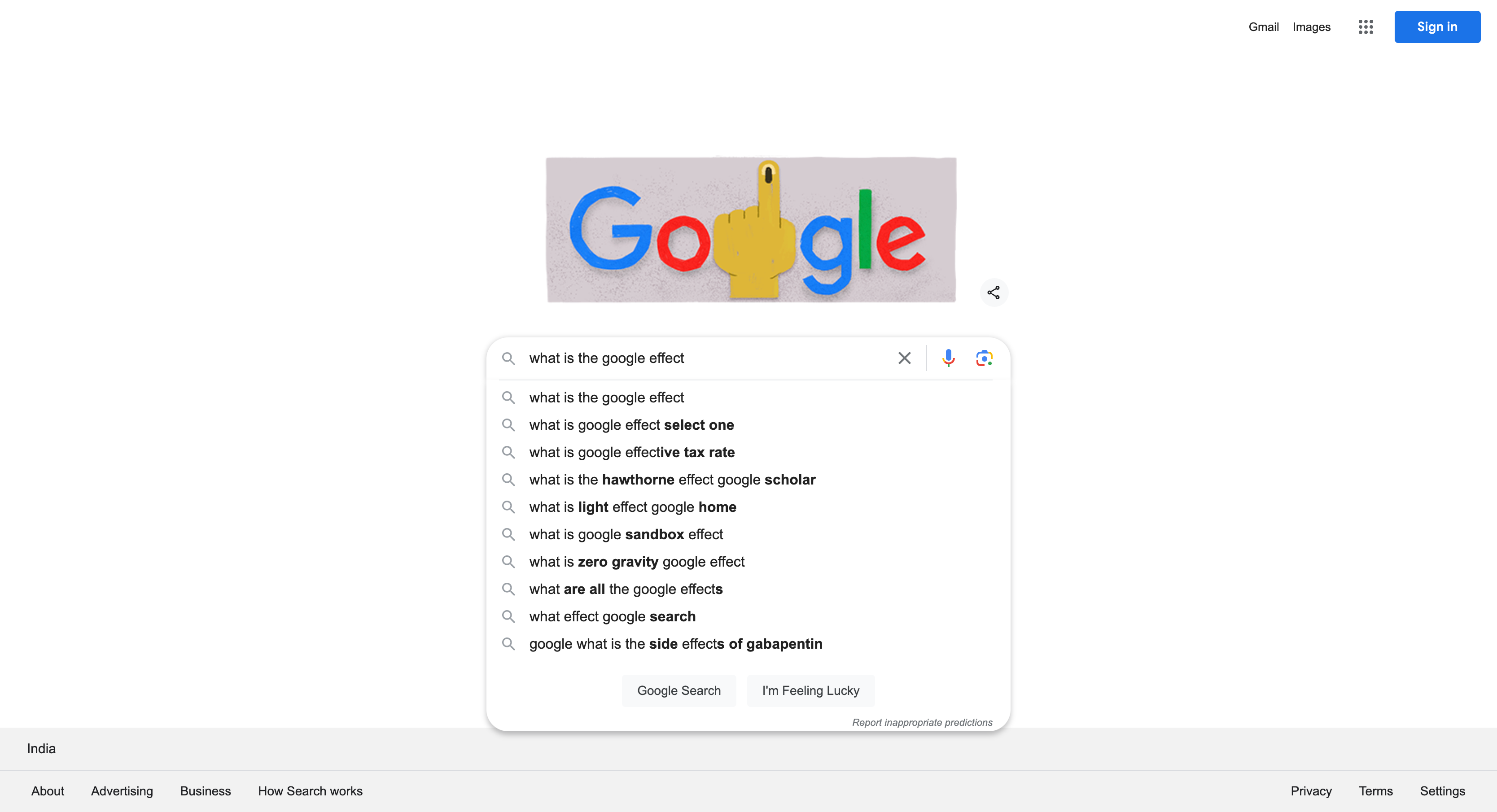
Our brain has wired itself to have its first instinct to any unknown information, which is to google it. Some might take the stand on how this projects the symptoms of cognitive disorders like ADHD and ADD due to constant exposure to vast amounts of information in a fraction of a second. But it is an undeniable fact that Google has aided innovations more than any other technology. Any information is provided conveniently in a way that caters to human impatience: the expectation of quick but accurate information in milliseconds.
What makes Google stand out?
When we think of web browsing, we generally relate it to Google. It has ingrained itself as a part of our everyday life. So much so that 1,095 to 1,460 searches per year are made by an average person (I googled it, of course).
For example, if we are looking for a restaurant, we are more likely to google it than to go to dedicated platforms made for this very purpose. We know we can find all the information in one place, whether it be directions to get to the place, the menu, reviews, and options to order online. By bringing different services together, Google created a cohesive ecosystem that keeps users coming back to its platform.
Extending this is the user experience Google delivers. The interface is designed to be intuitive and easy to navigate with fast loading times, and clear presentation of information. This user-centric approach ensures that people can quickly find the information they need.
By leveraging data from users’ search history, location, and preferences, Google also tailors search results to the individual. Personalization not only improves the accuracy of search results but also helps users feel understood and valued, increasing their engagement with the platform.
Lastly, Google’s scalability, support and community are vital to its success. Google’s services are accessible across various devices and operating systems, ensuring that users can access information anytime, anywhere.
Closing Thoughts
While we looked at Google becoming a verb, we also discussed how it has even triggered a phenomenon, a new pattern of user behavior. It will be hard for us to go back to a time without Google and that is what a great product does. It becomes a very important part of its users’ lives by solving an essential core problem. In this case, our need to access and consume information.
While ChatGPT is beginning to ingrain itself in our lives, we have to remember that the foundation of information access laid by Google. Many products and companies set their standard to Google, the best they can get. Often we see the term “the next Google” every time a promising platform makes it to the market. This displays Google’s hold on the apex of technologies. Making their whole objective revolve around having user-centric design and functionality made them indispensable.
So, perhaps if we take a page out of Google’s book, and aim to be the best, little by little, we can build an ecosystem that supports our product and integrate it into our users’ lives.