Read with Claude
 Read with ChatGPT

For most fleet operators, vessel manuals and engineering drawings are the main sources of information about spare parts. They contain bills of materials (BOMs), part numbers, specifications, quantities, and vendor details that maintenance and procurement teams need.
The information is available, but it is stored in files that are difficult to search and compare. Documents also differ by vessel, manufacturer, and language. Before ordering a part, someone must find the right information, understand it, and check how it matches the parts already used across the fleet.
The Challenges of Managing Spare Parts Across a Fleet
The same physical component can be listed under different names. One manufacturer may use a catalogue description, another may use a drawing reference, and a third may use an internal code.
As a result, MDM teams often have to research a part before they can order it. They may spend weeks searching through manuals instead of placing orders. The result can also depend on who performs the search and process been followed.
This creates several recurring problems:
-
Duplicate orders: The same part is ordered under different names because records do not show that they refer to the same component.
-
Incorrect parts: A part that is not suitable for the intended application is ordered and must be returned.
-
Unused stock: A vessel has spare parts that another vessel needs, but the procurement team cannot see that the stock is available.
-
Higher procurement costs: Teams may pay more for a part when a suitable option is already available elsewhere in the fleet.
These problems affect maintenance planning. A vessel may be unable to sail or continue its charter if the wrong part arrives or the required part remains unused on another vessel.
Delayed maintenance jobs, emergency air freight, and dry-dock overruns add direct costs and disrupt schedules. Over time, spare-parts spending increases, maintenance takes longer, and vessel schedules become less reliable.
Why Fleets Need Standardized Master Data
Fleet operators need a shared, standardized record of the spare parts used across their vessels. This is the role of a Master Data Management (MDM) system.
A standardized master record brings together information about a part from different manuals, BOMs, and engineering drawings. It connects different descriptions and references to the same component while preserving links to the original documents.
For this to work, teams need to:
-
Standardize part numbers, descriptions, and technical specifications.
-
Match entries that refer to the same component across vessels and manufacturers.
-
Connect each master record to its source documents for traceability.
-
Identify potential substitutes and verify their suitability before treating them as interchangeable.
-
Link standardized records with inventory and vendor information to support procurement decisions.
Building this data manually is a time consuming process as MDM teams must work through large volumes of technical documents, interpret engineering information, and verify matches. Incorrect matches can lead to the wrong component being ordered or supplied.
A reliable master data layer gives engineering and procurement teams a consistent basis for identifying parts, checking available stock, and making purchasing decisions across the fleet.
Extracting Master Data Across Documents
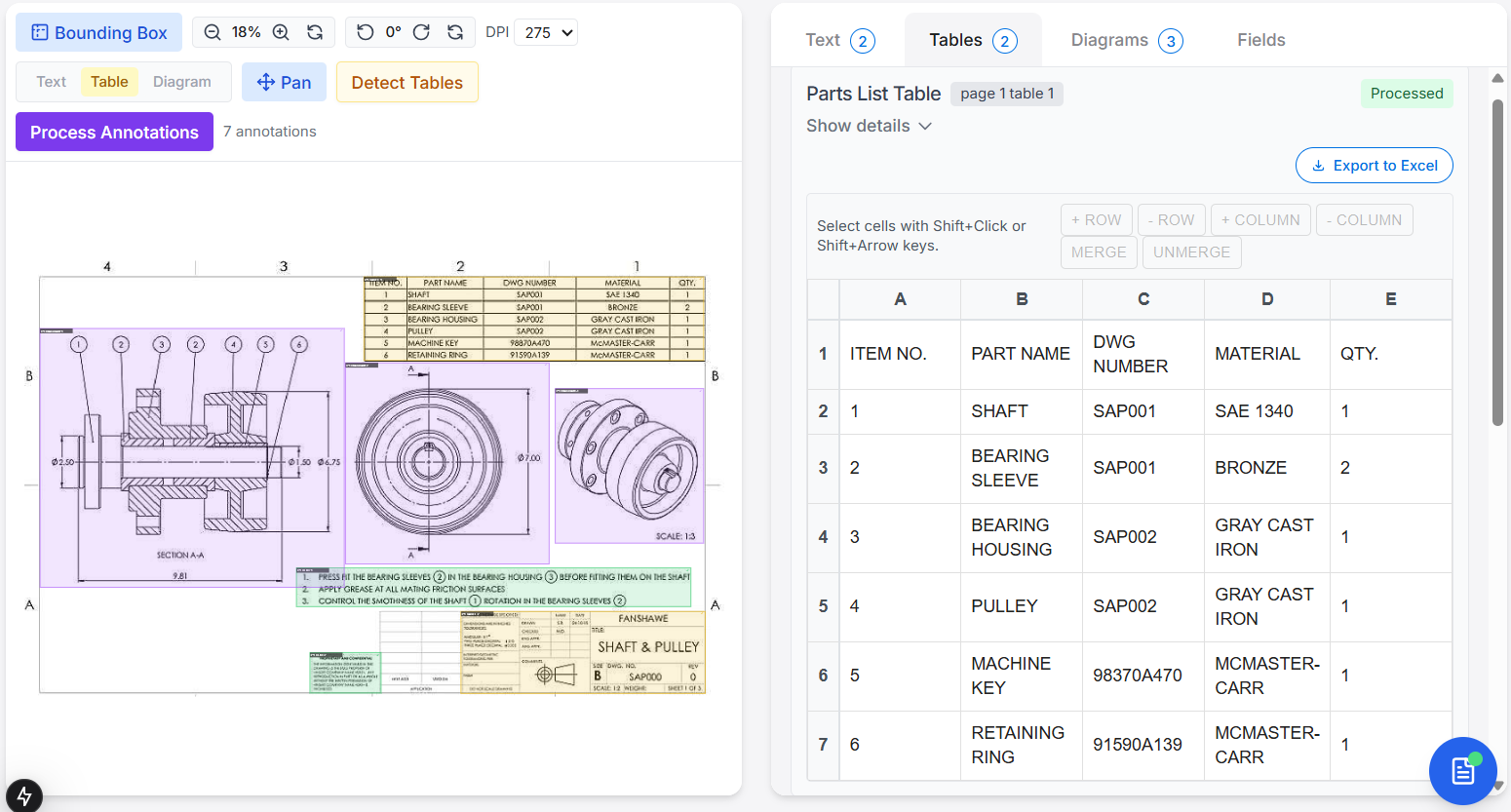
ADEOS supports the creation of standardized master data by extracting information from vessel technical manuals, bills of materials (BOMs), and engineering drawings.
It captures spare-parts information such as:
-
Part numbers and descriptions
-
Technical specifications
-
Quantities
-
Vendor references
Cross-document extraction connects these documents together to identify entries that refer to the same part.
For example, it can connect:
-
A part number listed in a BOM table to the same part identified in an assembly drawing.
-
A component described differently by two manufacturers.
-
The same component listed in the manuals of several vessels.
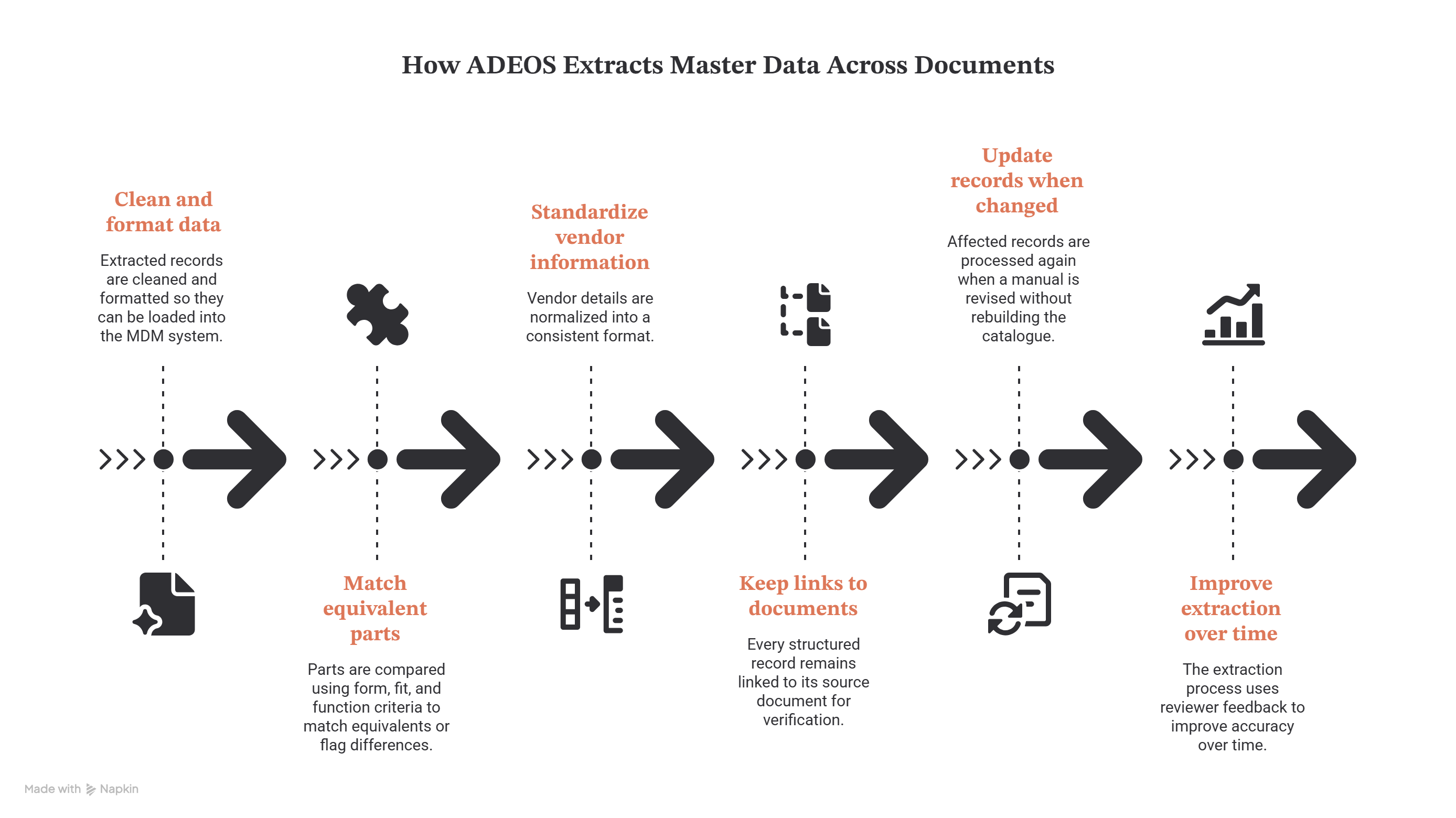
The process includes several steps as shown below
## Conclusion
A standardized spare-parts catalogue gives fleet operators a clearer view of what they already have, what they need to procure, and which parts can be used across vessels. This helps reduce unnecessary purchases, shorten procurement lead times, and make better use of existing inventory.
With consistent master data, procurement teams can identify existing stock, reduce duplicate purchases and make more informed sourcing decisions. Engineering teams also gain a traceable way to refer to components across vessels and technical documents.
ADEOS helps build this foundation by extracting and connecting spare parts information across vessel manuals, BOMs and engineering drawings. It gives MDM, engineering and procurement teams a more consistent and traceable basis for fleet wide spare parts management.