 Read with Claude
 Read with ChatGPT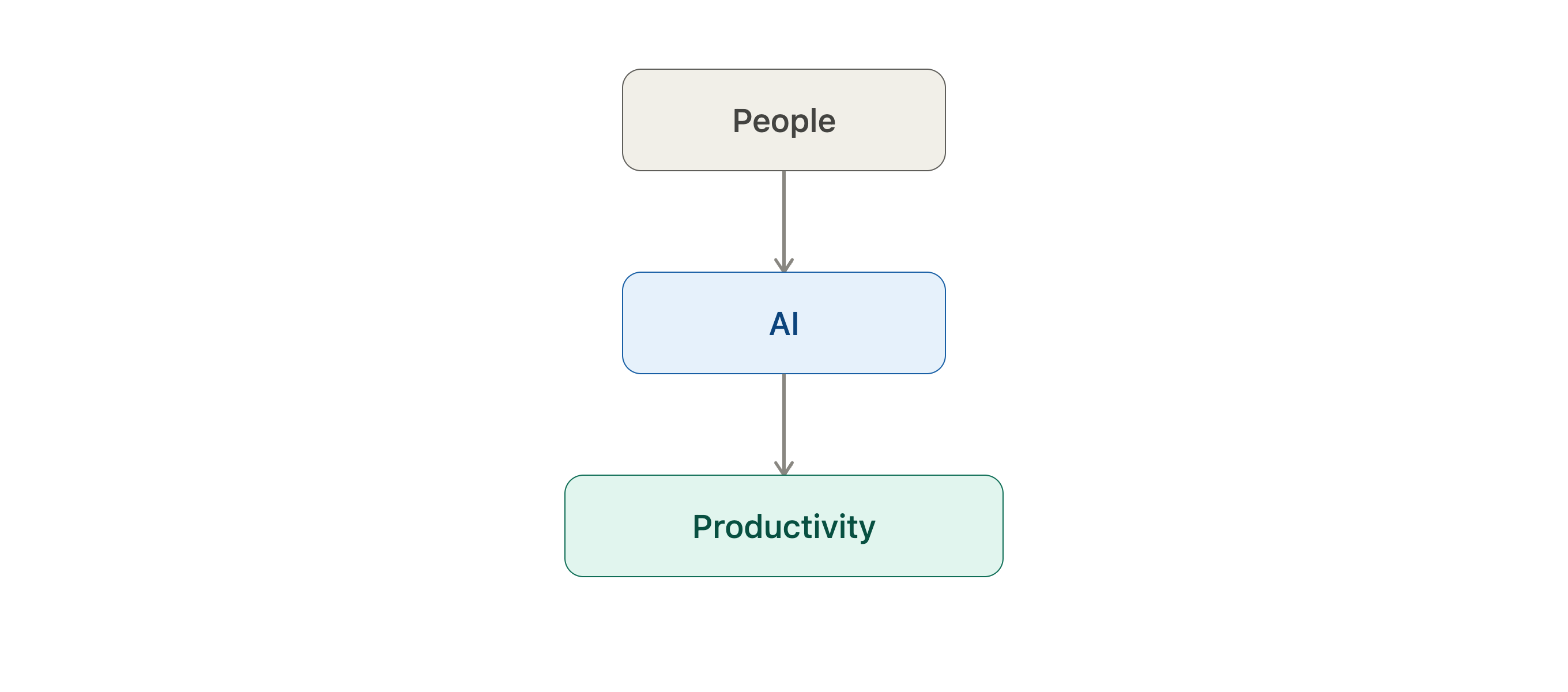
There is a pattern we have started noticing across almost every AI project we have worked on.
Two people use the same model. They ask nearly identical questions. They receive remarkably similar answers. Yet they walk away with completely different outcomes.
One moves faster. Their decisions improve. They ask better questions with each interaction. AI becomes another tool in an already capable toolkit.
The other becomes increasingly dependent. They accept the first answer they receive. They stop questioning assumptions. Their work gets completed faster, but they struggle to explain why a solution works, where it might fail, or how they would approach the same problem without AI.
The difference is rarely the model. It is the thinking that existed before the prompt.
For all the conversations around prompt engineering, model benchmarks and AI adoption, this is perhaps the most overlooked reality. AI does not replace thinking. It amplifies it.
And amplification works in both directions.
- When someone has developed strong judgement through years of experience, AI removes much of the repetitive work that slows them down. They spend less time writing boilerplate code, formatting documents, searching through documentation or summarising meetings. The mechanical effort disappears, leaving more room for solving the actual problem.
- But when someone has not yet developed that judgement, AI often removes the very struggle that helps build it.
The uncomfortable part is that both people can appear equally productive.
A few months ago, we were working through an engineering workflow with a client.
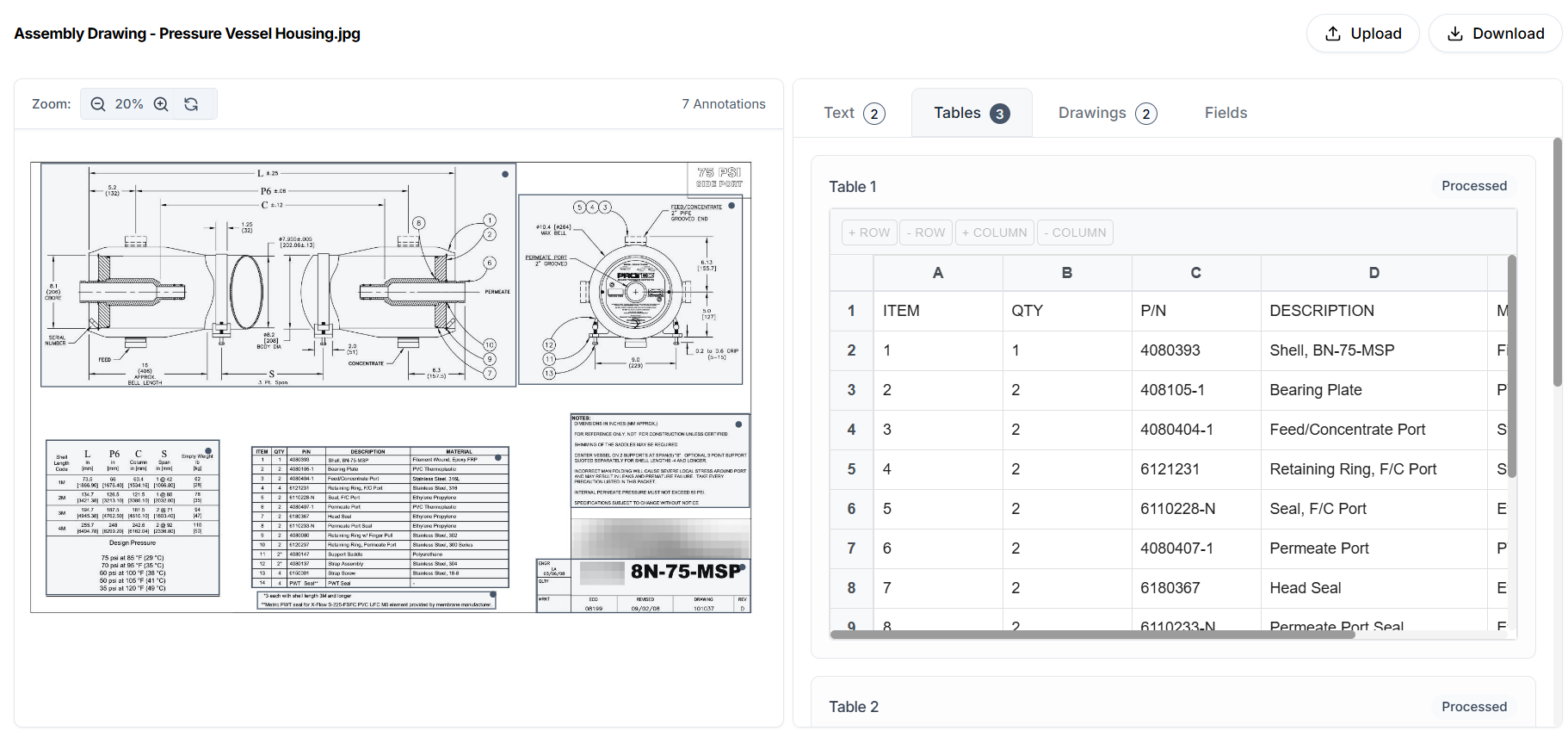
The discussion was about design reviews and how the current process was set. Every engineering drawing moved through hundreds of checkpoints before it reached manufacturing. There were checklists, SOPs, reviews and approvals. To someone seeing the process for the first time, it felt a bit too much.
But then we understood why they were put in place. They existed because every missed dimension, incorrect material callout or overlooked tolerance became reallu expensive later in the process.
The checklist was not replacing engineering judgement. It was protecting it.
Many organisations approach AI as though it can replace process, but that is never the case. The organisations seeing the greatest value from AI already have well understood processes. Their teams know how work flows. They know where decisions are made. They know which exceptions matter and which rules can safely be automated.
AI simply helps those organisations move through their existing processes with less friction.
The organisations that struggle usually have a different problem. They hope AI will create the process they never built.
This is where we think many conversations around AI adoption miss the point. The diagram everyone imagines looks something like this.
The Imagined Flow of AI Adoption (AI does not create process)
But in practice, there are two layers that sit in the middle.
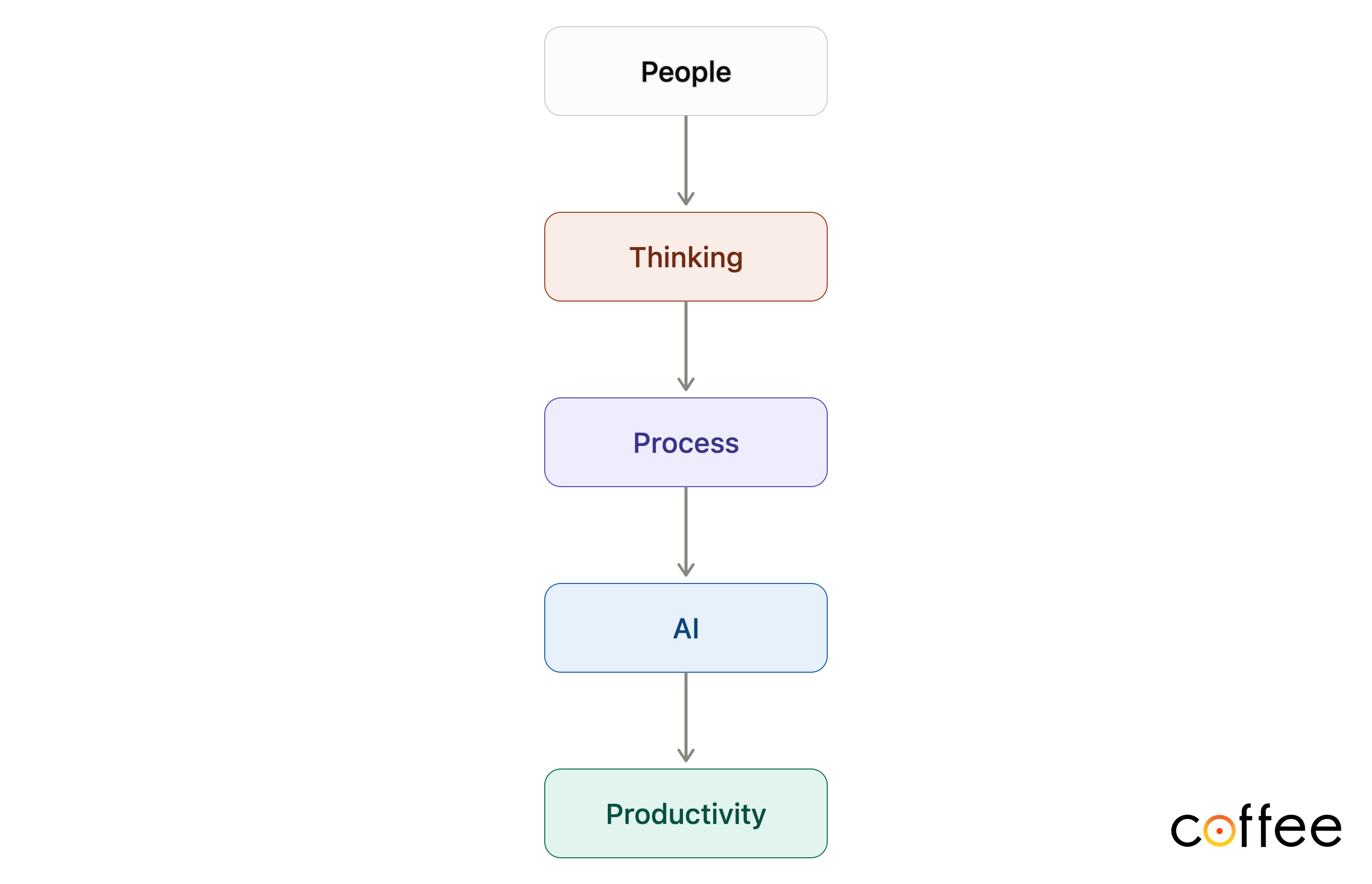
Those middle layers determine everything.
- If your thinking is weak, AI accelerates poor decisions.
- If your process is inconsistent, AI scales inconsistency.
- If your documentation is incomplete, AI produces incomplete answers.
- If your organisation has conflicting ways of doing the same work, AI faithfully learns those conflicts too.
Technology has always reflected the systems behind it. AI simply reflects them faster.
One of the most common questions we hear is whether AI will replace expertise. We think the more interesting question is whether it makes missing expertise harder to notice.
Someone can now generate a proposal, write software, produce a report or analyse a spreadsheet in minutes.
The output often looks convincing. Until requirements change. Until an unexpected exception appears. Until someone asks, “Why did you make that decision?”
That is usually where the difference becomes visible. Expertise has never been about producing answers. It has always been about recognising when an answer is incomplete.
This is why we rarely begin AI conversations with models or tools. We begin with people.
- How is work actually being done today?
- Where are decisions being made?
- Which parts require judgement?
- Which parts are repetitive?
- What knowledge exists only inside someone’s head?
Only after answering those questions does it make sense to ask where AI belongs. Because AI is remarkably good at reducing effort. It is not particularly good at replacing understanding.
Closing Thoughts
There is a temptation to think of AI adoption as a technology project. In our experience, it is much closer to an organisational design project.
Not every organisation needs to begin in the same place. If your teams already have strong processes and clear decision making, AI can help remove friction and speed up execution. It can remove repetitive work, shorten feedback loops and give experts more time to focus on the decisions that matter.
If your teams are still dependent on processes that live in spreadsheets, emails and conversations, AI can help surface those gaps. The value is not in automating them immediately, but in capturing knowledge, documenting decisions and building repeatable processes.
In both cases, AI has a role to play. The difference is knowing whether you are trying to move faster or trying to build a stronger foundation.
The best AI strategy is rarely about choosing the right model. It is about knowing what you are asking the model to amplify.
At Coffee Inc., we help organisations identify where AI can amplify existing strengths and where the foundations need to be built first. If that is a conversation you are beginning to have, let us know.