Read with Claude
 Read with ChatGPT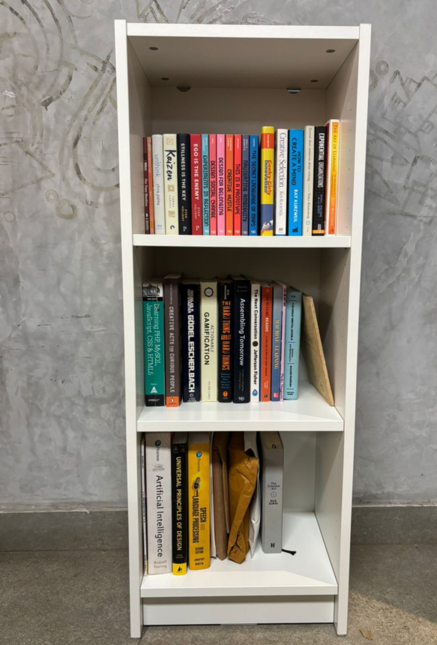
A year back, there was a package at our office, strangely long and compact. One of us was checking out the package (actually called as flat pack), questioned what it contained, and we got to know that it was a bookshelf. I couldn’t believe it at first, until I realized it was actually dismantled and compacted into that package.
We thought why do we have to assemble it ourselves? But why didn’t it come assembled firsthand? We got to know the why IKEA ships flat pack, later. (By chance if you are curious, c_heck out this_ link). So, we took it on as a challenge, and got together as a team to assemble it together.
Our IKEA Bookshelf
When we opened the box, we took out all the parts, connectors, and the manual. We started discussing where to begin having a look at the manual. What surprised us was how simple it was to do follow the steps. Then somewhere in the middle, we made a mistake. We knew we had missed something. We had to stop, step back think about what we had done, figure out where we went wrong. Turns out, we missed a side and a couple of steps in the process. Once we figured that, we got back on track and swiftly built the bookshelf.
Every time we see it now, we remember it as something we built together. It feels like a memento. If it had arrived fully assembled, it would just be furniture.
Little did we know, we experienced the IKEA effect, the sense of pride of owning somthing that we built (coincidently with building an IKEA product). The effort, the discussion, the problem-solving along the way created a sense of ownership that a ready-made product never could.
IKEA effect is a cognitive bias where people place higher value on things they helped create, simply because they put in the effort.
Do You Own What AI Builds?
Thinking about this, I started drawing a parallel with how we use AI today to build solutions and products. If I provide an idea, a problem statement, or a rough or clear outcome I want to build with AI, I give instructions, shape the direction, and iterate until the output looks like what I had in my mind.
That raised a question for me.
If I am adding my complete plan and idea as instructions to AI to get the outcome, do I really own what gets built?
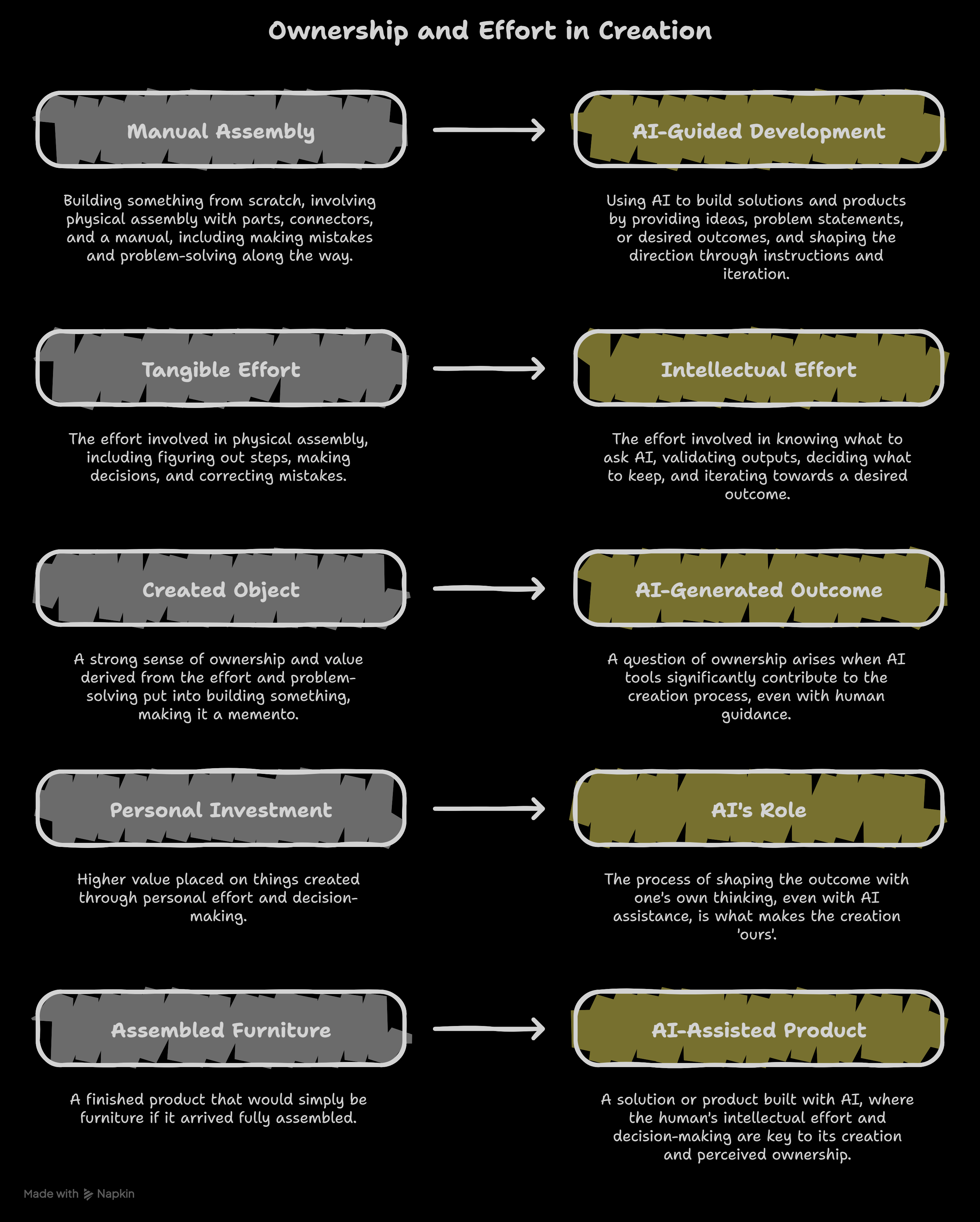
Before AI, building something was doing the work from scratch. Writing every line of code, figuring out every step, making decision through the process. Now there are AI tools that help complete the work faster. The process has changed, and the question of ownership starts to make sense.
The Effort Remains
But when I think about what the effort actually looks like, it is still there. Knowing what to ask, validating when the output is close or needs more work, deciding what to keep, iterating toward the outcome you had in mind from the start.
This shows the judgment and decision-making I shaped through the instructions I provided to AI. The process is different, but the effort is the same.