 Read with Claude
 Read with ChatGPT
In today’s world, we are spoiled for choice when it comes to a product that satisfies our needs. An optimal means of testing out a concept in this rapidly evolving landscape is through Minimum Viable Products (MVPs). However, as the competition intensifies and user expectations continue to rise, simply delivering just a viable product may no longer be enough to hold your user’s attention and sell them on the core value.
We need to take a step beyond, go that extra mile to deliver a Minimum Lovable Product (MLP), where the focus extends beyond just the functional to the wow factor. Let us delve deeper into the process of building products and explore how we can sprinkle the extra magic onto our own product.
It all starts with an idea
Every product or feature begins with an idea, the seed of change that we are looking to bring to life.
An idea is like a virus, resilient, highly contagious. The smallest seed of an idea can grow. It can grow to define or ̶d̶e̶s̶t̶r̶o̶y̶ you.
But an idea alone isn’t enough. It needs to be nurtured, developed, and transformed into something that addresses a specific problem for a specific audience.
Over the course of the article, we will explore the 4 quadrants of the Totem sheet and see how we can fill each one of it out to arrive at an overview regarding our MLP.
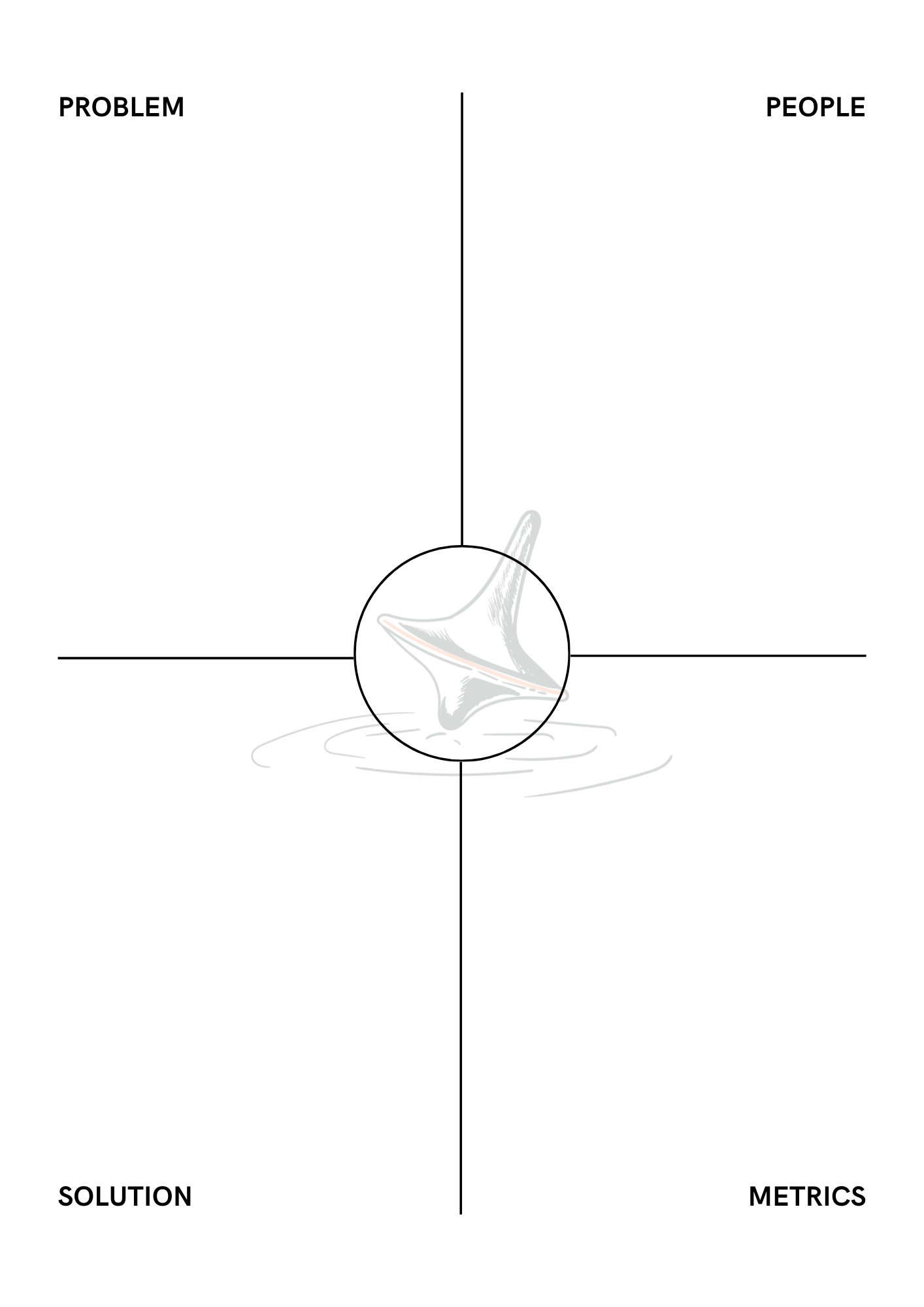
The Totem Sheet by Coffee Inc.
Understand the Problem
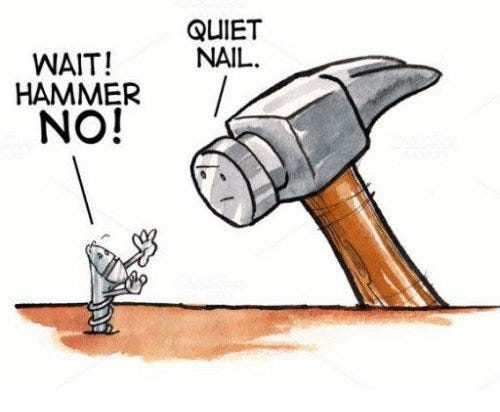
Usually, when we have an idea, we instantly move to defining the solution and focusing on the features rather than trying to define the problem we are trying to solve. It is like getting a hammer (the solution) and then looking around for a nail to hammer in (the problem) rather than actually having a need for it.
“To a man with a hammer, everything looks like a nail.”
At this point, it is better if we take a step back and focus on defining the problem and understand the bigger picture.
Once we shift our perspective from the solution to the problem, we can get to the root cause of the pain that we are trying to address. In Julie Zhao’s talk on “How a Facebook Designer thinks?”, she highlights 3 questions that we should answer at the outset to reveal the most urgent problems to handle:
- What people problem are we trying to solve?
- How do we know if it is a real problem?
- How will we know if we solved this problem?
These are the three questions we can use to guide us in elaborating the problem we are solving for. They’re equally applicable to any product, in any industry, and they’re essential to creating a product that people will love.
Identify your People
Having identified the problems, we look at people, whom it affects the most. These are the ones who face the brunt of the problems day in and day out and will be most satisfied when it is solved. Understanding your customer is key to creating a product that meets their needs and exceeds their expectations.
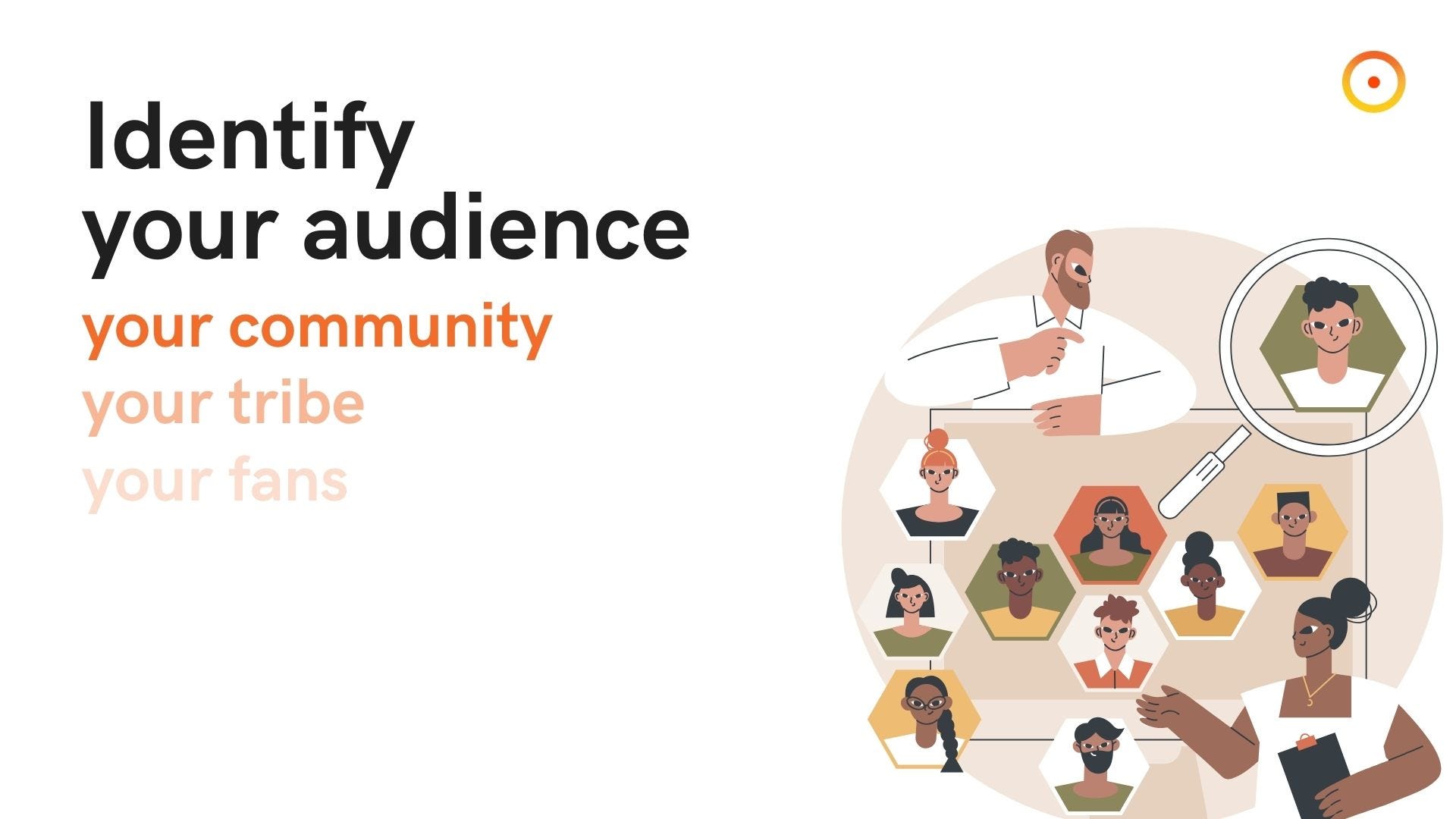
In this scenario, you are not only working to identify your audience, but also going above and beyond to identify your community, your tribe, and most importantly, your fans. Your fans are the ones who can’t wait to use your product, who will stand in line for hours just to get their hands on it.
Ask the right questions
Your users are usually driven by specific goal, and they encounter a problem in the process. They try to solve it with hacks and workarounds, but that problem still persist. To further understand the “real problem”, the key is to ask the right questions.

You have to keep in mind not to ask leading questions or questions directly showcasing your idea, but rather focus on asking open ended questions.
- How do you currently handle [insert problem]?
- What challenges do you face when trying to achieve [insert goal]?
- Can you walk me through your process and point out where you encounter [insert problem]?
- What would make your life/job easier when dealing with [insert problem]?
- Can you share any stories related to [insert problem]?
- What would a perfect solution to [insert problem] look like for you?
- What is the impact of [insert problem]?
Look beyond what is said
Pay attention to details in conversations with your customers. Understand their internal triggers and needs, which are often more complex than they seem on the surface. The key is to understand what problem they are actually facing rather than focusing on what they are asking you for.
“Some people say, “Give the customers what they want.” But that’s not my approach. Our job is to figure out what they’re going to want before they do. I think Henry Ford once said, “If I’d asked customers what they wanted, they would have told me, ‘A faster horse!’””
― Steve Jobs
Indeed the focus should not be on trying to get the horse to be faster, but rather on the problem itself, which is the need to go “faster”, to reach the destination in a shorter period of time. Identifying the core desire will then help you frame your solution better.
Sometimes, the very pain point you are trying to address is the one you face. Travis Kalanick and Garrett Camp came up with the idea for Uber when they couldn’t find a cab in Paris. They thought of a way to summon a ride with the tap of a button on their smartphones, and that evolved into the first iteration of the ride booking app.
Question yourself
Further, answer the following questions to see that you do not get blinded by vanity or your ego, but are actually the right person for the job:
- How can you solve [insert problem] for your users?
- What value can you create for your users when solving it?
- Why are you the ones who should solve it?
- How much would it cost you to solve it?
- Are you actually solving [insert problem] or are you just building a feature for an existing solution?
- Would our users change what they do now to use your solution instead?
Build the Solution
Now that you have the problem defined & validated and an audience waiting to be satisfied, it is time to build out the solution. Our focus is on developing the essential features. It is important to stay lean and focus on the key components that will solve the users pain points.
Going a step beyond minimum, we also look at what our users would fall in love with, the features that would make them ask “When can we use it?!”. We look to identify and incorporate that magic moment — the point at which your product truly resonates with your customers and delivers value in a way that no other product can.
You can see this in how Spotify not only plays songs from an album in loop, but goes one step ahead and automatically plays songs that match the genre, that are in line with the songs. Not only do they give you new songs to listen to , but they also help you find new artists in the process. That is that extra sprinkle of love and wow!

Sometimes, an MLP will be elaborate with mobile apps and physical devices, but sometimes, it can be as simple as a landing page, as illustrated by Airbnb.
Realizing the market need back in 2008, Airbnb launched their first prototype with just a basic website (airbreadandbreakast.com) with just two-three pics of their living room and one web page. They got their first three paying guests and they accommodated them by setting up mattresses in their living room. That is how they validated their product idea with their first customers.
Track the Metrics
Once you have a lovable product, it’s time to put it out there and talk about it everywhere. Make sure your audience knows you are live and ready to solve their problems. Look at the metrics that matter apart from visitors who show interest.
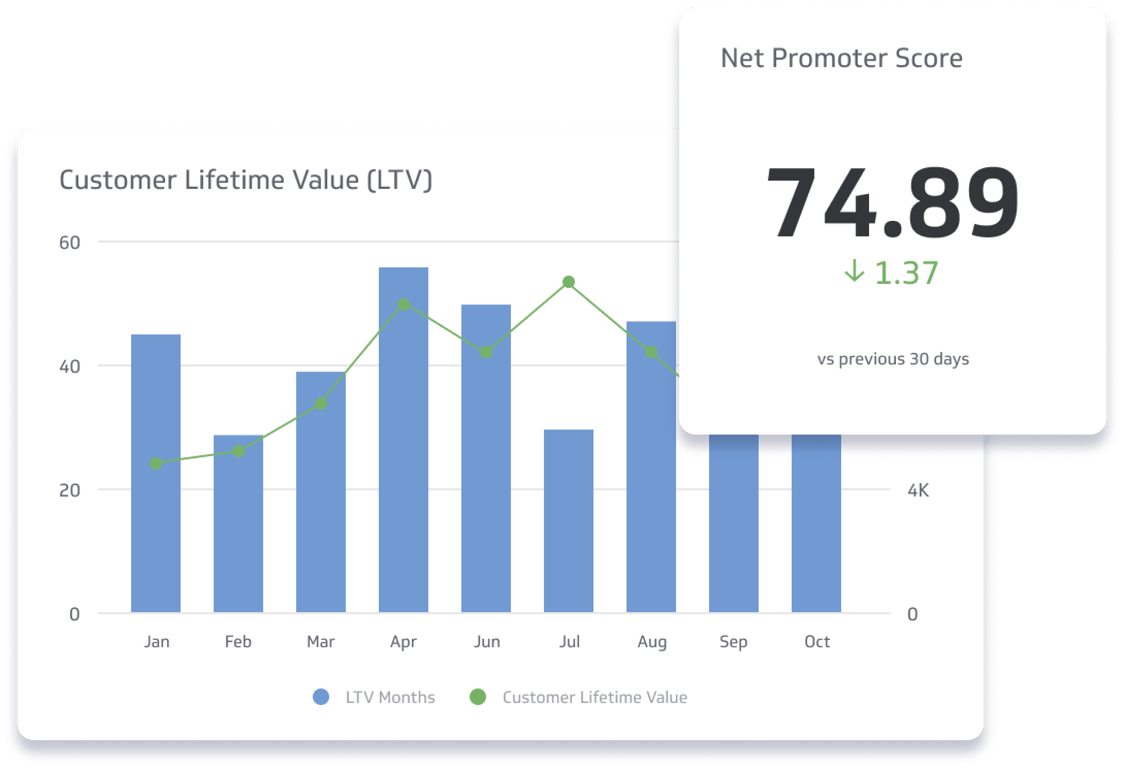
You need to define the tangible ones like:
- product sign ups
- subscriptions
- purchases
- daily active users
- monthly recurring revenue
- pageviews
- followers, etc.
Match your metric against actual data to understand the traction of your product. Continuously seek feedback to improve and refine your product. Over time, your metrics will help you identify if you are solving an actual problem or not and you can then decide to build out a full-fledged product.
So, what about AI?
Just as the many tools at our disposal in the process of building products, AI is another one in our arsenal. AI can serve us in two respects:
- one as part of our product, to make our products more smarter, secure, personalized, faster and accurate. The best examples would be Netflix’s recommendations or Spotify’s next song suggestion or Gmail’s spam detection.
- two, to enable us by validating our ideas and providing research (which of course needs to be cross-referenced). AI’s ability to quickly prototype and collate ideas makes it a great bounce board.
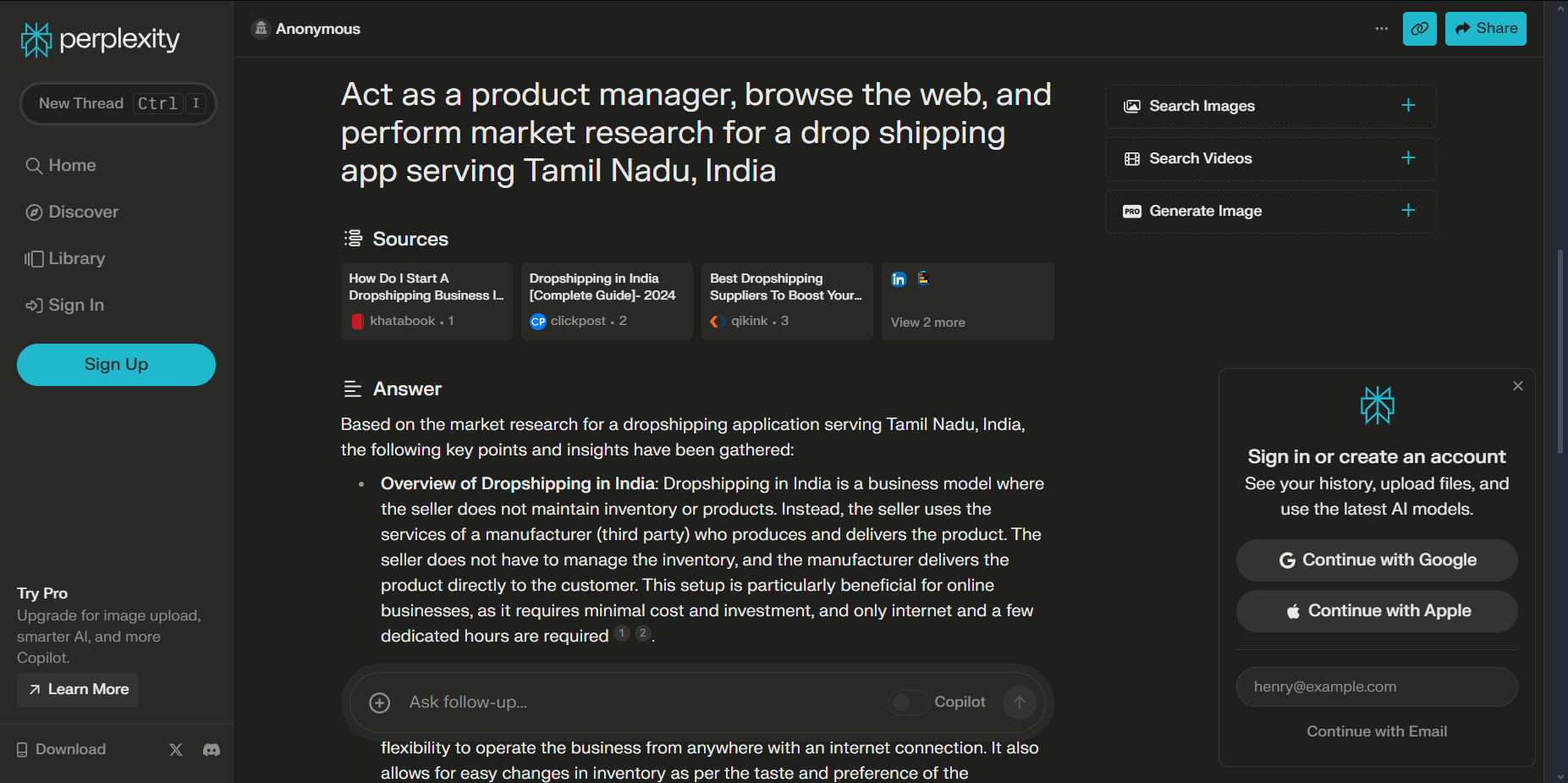
Understand: The outcome of AI is a result of our input to the system at its current state. In the end, our knowledge and experience are what limits or maximizes the potential of AI.
“AI exists to maximize or minimize human actions — with limitations.”
Conclusion
Building a minimum lovable product in an AI world is no different from ages past. It still involves understanding your audience, identifying the real problems, talking to your customers, conducting thorough market research, and focusing on the details that make your product unique and valuable. As time passes and technology evolves, we have more tools at our disposal to assist us in the process. Today, this tool is AI.
It is in our hands to make the best use of all that is accessible to us to build our products. In the end, we should not forget the heart of it all, the customer. We are here to satisfy their needs and solve their pain points with our products. That is what will stand the test of time.
The Totem sheet is a part of The Product Totem by Coffee Inc., a curated collection of resources and insights to help you in your product development journey.
The Coffeed newsletter is out now. Subscribe at https://coffeed.substack.com to get the latest edition as soon as it is live.